How to Spot Hail Damage on a Roof
After a powerful Florida storm, we often miss the early signs of hail damage—things like bruised shingles or dented vents. These overlooked issues can lead to serious, long-term roof trouble. Recognizing what hail damage looks like across Florida’s most common roofing materials lets us act quickly and avoid bigger repairs later. Small cracks left untreated quickly become costly leaks.
Key Takeaways
- Hail damage usually shows up as bruised, cracked, or granule-worn shingles. These may not involve clear punctures but still weaken the roof.
- Metal, tile, and flat roofs each react differently to hail. Look out for dents, chips, cracks, or standing water, depending on the type of roof.
- Safe ways to spot problems include ground-level views and attic checks. Watch for loose granules in gutters or water marks on ceilings.
- Take clear photos, record the date and weather, and organize this documentation to move insurance claims forward without setbacks.
- Aging roofs or earlier patchwork make damage more likely. After strong storms, expert inspections are key to catching what we might miss.
Spot These Common Signs of Hail Damage After a Florida Storm
If a recent Florida storm rolled through your neighborhood with thunder and ice pellets, your roof may have taken a hit—even if it looks fine from the ground.
Hail doesn’t need to be large to cause damage. Even small stones, when driven by Florida’s intense wind, can bruise shingles or crack tile surfaces. Spotting issues early can protect us from costly repairs down the road.
Here are the hail damage roof signs Florida residents should check for:
- Dented, bruised, or cracked asphalt shingles are the most frequent signs. Shingles may look bumpy or darker where hail hit.
- Granule loss is a big red flag. If you see black spots on shingles or in gutters, the protective top layer may have been knocked off, which the Asphalt Roofing Manufacturers Association explains can accelerate shingle deterioration.
- Circular impact marks—often about the size of a dime or quarter—can appear on shingles, clay tiles, or metal panels.
- Dents in roof vents, flashing, skylights, or gutters usually point to hail contact.
- Shiny or soft spots on asphalt indicate granules have been stripped away, exposing the bare asphalt underneath.
- Damage to siding, fascia, or window frames around the roofline may hint at hail force also reaching the roof.
5 Fast Signs You Might Have Hail Damage
Here’s a quick visual list for early signs of trouble:
- Mineral granules collecting in gutters or downspouts
- Random dark spots on your shingles
- Dents in metal flashing or vents
- Chipped paint or siding near your roofline
- Water stains on attic ceilings or upper interior walls
Spotting these signs early gives us more time to determine if the issue is cosmetic or functional. Cosmetic damage might not impact performance right away, but loss of granules or cracks could lead to leaks later. It’s better to be cautious than stuck with long-term moisture problems. For more about hard-to-catch issues, see our guide to roof leak warning signs.
What Hail Damage Looks Like on Different Roof Types
Hail affects various Florida roof types in different ways depending on their materials, slope, and age. Here’s how signs of roof hail damage after a storm show up across common residential and commercial systems:
Asphalt Shingles
This is the most common roofing material in Florida homes. Look for:
- Soft “bruises” on the shingle surface
- Missing granules exposing dark underlayment
- Cracked or curled shingle edges, especially on older roofs
If you’re wondering if repair is possible instead of replacement, asphalt shingles can often be patched, but only once a full inspection is done.
Other Roofing Materials
Other roofs show different damage patterns:
- Tile roofs (such as clay barrel tiles often seen on coastal properties): hail may chip corners or cause faint fracture lines. Cracks can lead to moisture entry over time.
- Metal roofs: look for small circular dents or surface coating damage. Paint loss can void certain warranties. These are less likely to leak right away but still require evaluation. Learn more about metal roofing resilience.
- Flat or low-slope commercial roofs: punctures or tears in the membrane, pooling water, or lifted seams are all signs of trouble. Frequent standing water after storms is a major issue for these roof systems, as the National Roofing Contractors Association notes about ponding water risks on low-slope roofs.
Things like roof slope, material thickness, and age all influence how easily hail causes harm. Older tiles or weathered shingles, for example, crack more easily. Understanding those nuances helps us make smart repair decisions.
How to Safely Inspect Your Roof Without Climbing It
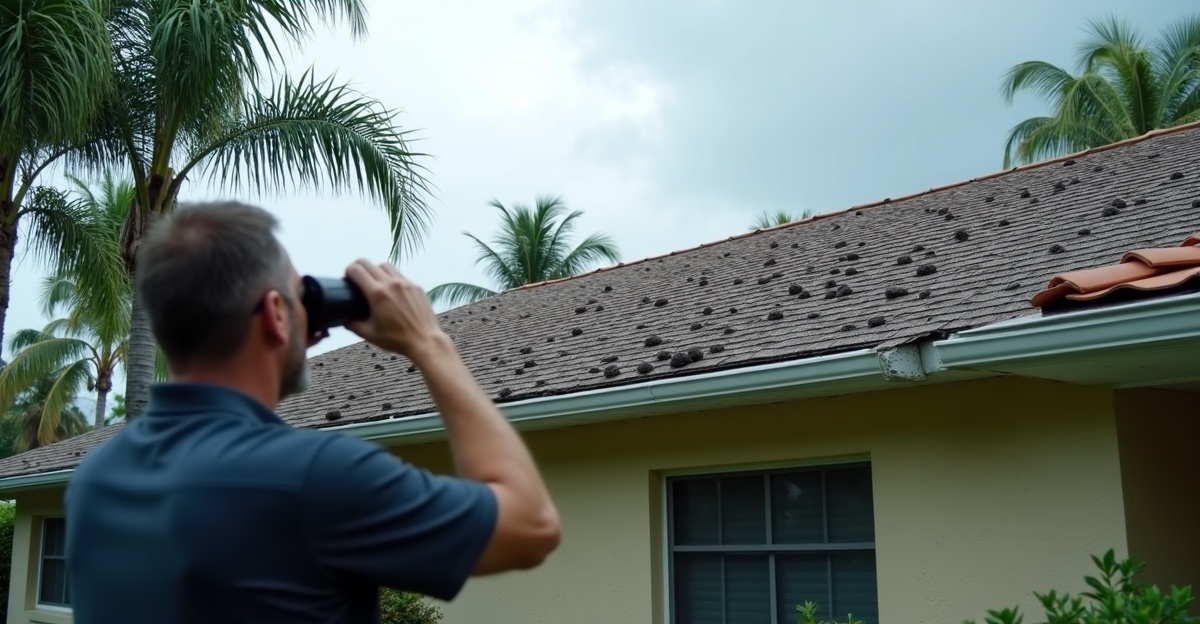
Roof checks should never compromise safety. We recommend inspecting from the ground, using tools like binoculars or a drone if available. Checking from the attic is another smart way to spot leaks early on.
Start with this hail damage roof inspection checklist:
Outdoor Checks
- Dents in gutters, downspouts, metal vents, or flashing
- Shingle debris or granules near the foundation
- Visible cracks or marks on shingles or tiles at roof edges
- Damaged siding, window frames, or fascia near the roofline
Indoor Checks
- Check for dark water stains on the ceiling or rafters
- Musty smells, especially after storms, may suggest hidden moisture
- Light peeking through the roof boards or near flashing
Avoid climbing onto the roof unless you’re trained and equipped to do so safely. Preliminary reviews should be minimal-risk. In many cases, letting a specialist handle the physical inspection is the best call. To cover the full scope, be sure to read our guide on how to know if your roof has storm damage.
When to Call a Professional Roofer—and What to Expect
There are times when it makes sense to bring in an expert. Here’s when to call a roofer after hail:
- You’ve seen dents, cracks, or stains and need full inspection
- The hail was 1 inch or larger, which the National Weather Service classifies as potentially damaging hail.
- Your roof is older or had previous repairs that could weaken its storm resistance
A thorough inspection from Pyramid Roofing Fla comes at no obligation. We believe in honest assessments with zero pressure. Our experienced local team uses moisture-detecting tools, drones, and years of material-specific knowledge to spot issues early—even ones invisible from the ground.
Afterward, we’ll walk you through the next steps, whether it’s a small roof repair or a larger concern. If repairs are needed, we’ll explain your options clearly and respectfully.
Tips for Documenting Hail Damage for Insurance Claims in Florida
If your roof suffered storm damage, proper documentation helps ensure your claim goes smoothly. Every step we take upfront can strengthen your position with adjusters.
For effective roof damage documentation for insurance:
- Take time-stamped photos of all suspected damage from multiple angles
- Save weather info like hail size reports from NOAA or local news coverage
- Keep dated notes of anything you find inside or around your home
- Archive emails, estimates, or inspections you receive
For residential homeowners, the claim window can range from months to a few years depending on your policy, as outlined in Florida Office of Insurance Regulation consumer guidance. Commercial roof hail damage signs may require faster reporting and formal third-party inspection documentation.
Even if damage seems minor, it can grow into major issues later. Log cosmetic problems now while they’re fresh. Our article on storm damage and insurance coverage explains more about getting the timing right.
Why Florida Roofs Face Unique Hail Risks—and How Pyramid Roofing Fla Can Help
Florida sees its share of weather extremes. According to the Florida Department of Financial Services’ storm and insurance claim reports, our state receives multiple hail events every year—many of which lead to filed claims. Central and Northeast Florida are hit hardest during spring and late summer.
Here’s the challenge: heat, humidity, salt air, and intense sun accelerate wear. A small hail crack now might become a leak during hurricane season. High humidity can push water through already-weakened roofing layers.
That’s why we tune our post-storm inspections to Florida’s unique risks. At Pyramid Roofing Fla, our techs understand the quirks of coastal barrel tiles, shingle aging in subtropical sun, and what building codes permit in your area. We repair with location and material in mind—no guesswork.
For severe storm issues that need immediate care, visit our storm damage repair services page. We’re proud to serve local homeowners and businesses with a steady hand and honest guidance.
Whether you’re just checking for impact marks or suspect hidden leaks, we’re here for a free, friendly roof check. Contact us today and let’s take a look together. Florida roof damage from hail doesn’t have to mean long-term stress. Let’s protect your home, one shingle at a time.
Frequently Asked Questions
Hail damage on a Florida roof often appears as bruised or cracked shingles, granule loss, or circular impact marks. You may also notice dents in metal vents, flashing, or gutters. Because Florida storms include strong wind and rain, damage can be subtle and worsen over time if not addressed quickly.
Yes, small hail can still damage a roof in Florida. Even pea-sized hail can bruise asphalt shingles or crack tiles when combined with high winds. This type of damage may not puncture the roof immediately but can weaken materials, leading to leaks and accelerated aging months later.
Cosmetic hail damage affects appearance, such as minor dents or surface marks, while serious damage compromises roof function. Signs of serious damage include exposed asphalt, cracked tiles, missing granules, or water stains inside the home. A professional inspection is often needed to confirm whether repairs or replacement are necessary.
Florida homeowners should inspect their roof as soon as it is safe after a hailstorm, ideally within a few days. Early checks help document damage for insurance claims and prevent small issues from becoming leaks. Waiting too long can allow heat and humidity to worsen hidden damage.
Most Florida homeowners insurance policies cover hail damage, but coverage depends on the policy terms and roof age. Insurers typically require proof that damage was caused by a specific storm. Prompt documentation, photos, and a professional inspection improve the chances of a smooth claim process.