Can Flat Roofs Handle Heavy Rain in Florida?
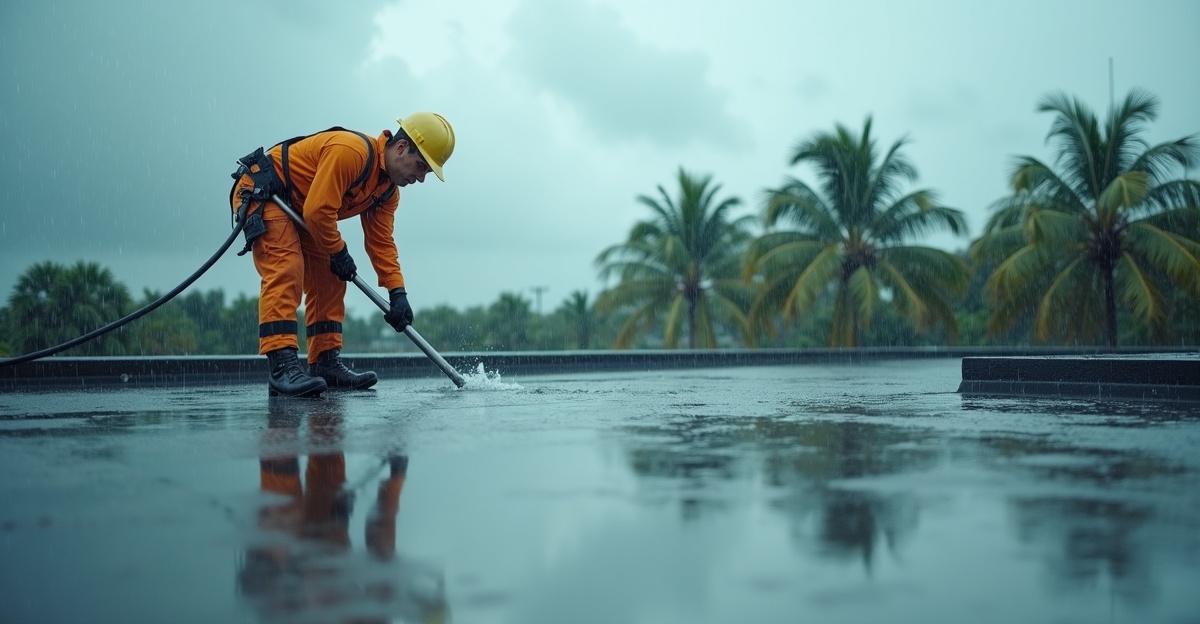
Flat roof heavy rain Florida concerns often increase during summer thunderstorms and tropical systems. Properly built low-slope roofs handle intense rainfall with positive drainage and code-compliant construction. We design slope, drainage, materials, and maintenance plans to work together. As a result, flat roofs across Central and Northeast Florida can perform reliably during severe storm conditions.
Key Takeaways
- Flat roofs include a controlled slope and engineered drainage systems that direct water to drains, scuppers, and gutters to prevent prolonged pooling.
- Most post-storm leaks result from clogged drains, failing flashing, aging seams, or poor installation rather than the flat configuration itself.
- Ponding water that remains longer than 48 hours signals a drainage issue and requires professional evaluation.
- Routine maintenance, including twice-yearly inspections and debris removal, lowers leak risk and extends roof service life.
- Targeted repair often resolves isolated issues, while widespread membrane or structural damage may warrant replacement after a detailed assessment.
Flat Roofs and Heavy Florida Rain: What Homeowners and Property Managers Need to Know First
Flat roofs can handle heavy Florida rain when they’re properly designed, installed, and maintained. The concern behind “flat roof heavy rain Florida” is understandable, especially during summer downpours and tropical systems, but the structure itself isn’t the weak point.
A flat roof isn’t truly flat. It’s a low-slope system, typically built with a slight pitch that directs water toward drains, scuppers, or gutters. Florida building codes require positive drainage and proper design for high rainfall and storm exposure. That means when a flat roof is built the right way, it’s engineered with water management in mind.
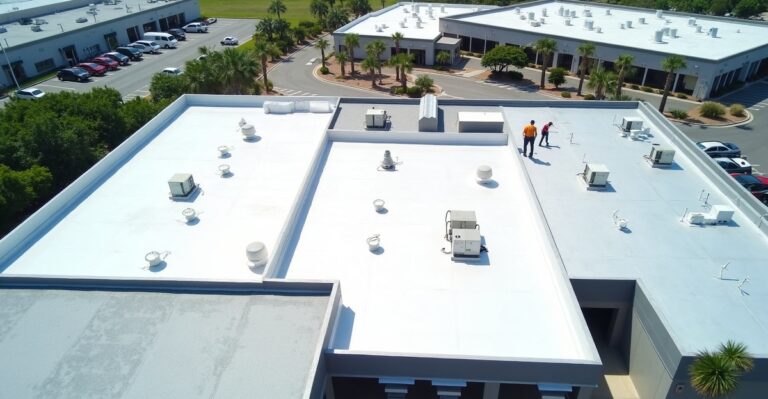
Across Central and Northeast Florida, we see flat roofs on homes, office buildings, retail centers, and warehouses. They’re common because they perform well in our climate when maintained properly. They also offer several advantages, which we explain in our overview of flat roof system benefits for Florida properties.
Performance depends on a few key factors: slope, drainage systems, roofing materials, installation quality, and ongoing maintenance Florida property owners commit to. Intense summer storms, high humidity, and hurricane activity all test a roof over time. No system is maintenance-free here. Still, with proper planning and care, flat roofs are fully capable of standing up to Florida’s heaviest rain.
How Modern Flat Roof Drainage Systems Manage Heavy Rainfall
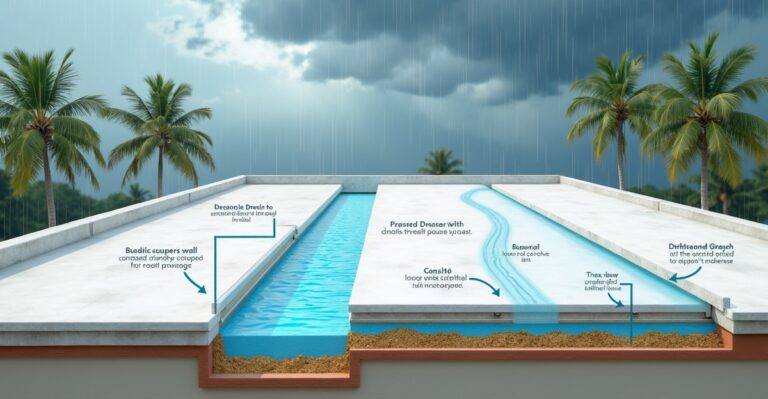
Water management makes or breaks a low-slope roof. Even a small incline, often about 1/4 inch per foot, creates positive drainage that moves water off the surface.
Many systems use tapered insulation to help guide water toward designated exit points. Internal drains connect to plumbing lines and carry water down through the building. Scuppers, openings along parapet walls, allow water to spill into exterior gutters. Perimeter gutters then move that water safely away from the structure. We break this down further in our guide on how flat roof drains work.
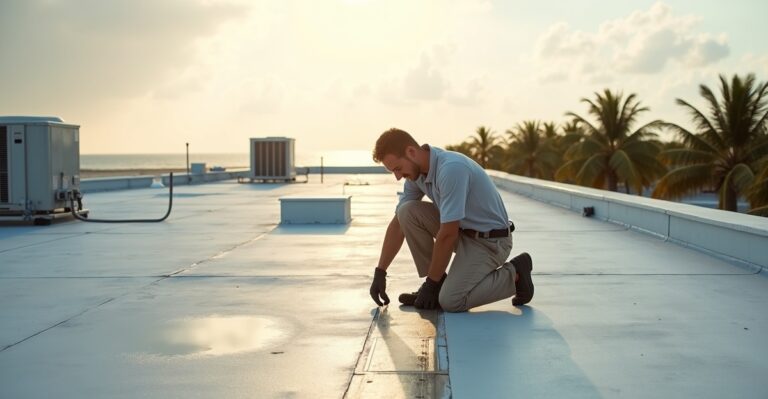
Flat roof ponding water refers to water that stays on the surface more than 48 hours after rainfall. Short-term water presence during a storm is normal. Persistent standing water is not. When drainage functions correctly, even intense Florida storm totals move off the roof efficiently.
Many commercial flat roofing Florida properties rely on materials like TPO, modified bitumen, or EPDM. TPO roofing Florida systems use heat-welded seams that create strong, watertight connections. Modified bitumen roofs rely on multiple asphalt-based layers for durability. Each system can handle heavy rain when installed and flashed correctly.
From what we see in the field, most leaks after major storms aren’t caused by the membrane failing. They’re typically the result of clogged drains, blocked scuppers, or deteriorated flashing around penetrations. The word “flat” isn’t the problem. Engineering and maintenance determine how well the roof performs.
What Causes Flat Roof Leaks After Heavy Rain in Florida
Flat roofs Florida storms pass over every year can expose weak points. The most common causes of post-storm leaks include:
- Clogged internal drains or scuppers filled with leaves and debris
- Ongoing flat roof ponding water from improper slope
- Deteriorated flashing around vents, skylights, HVAC units, and parapet walls
- Aging seams in TPO systems or cracks in modified bitumen
- Installation shortcuts that ignored proper slope or drainage design
High humidity and constant UV exposure in Central and Northeast Florida also affect aging. Over time, membranes expand and contract. Sealants dry out. Flashing materials break down. These factors influence flat roof lifespan Florida property owners can expect. We detail this further in our article on the average lifespan of a flat roof.
Warning signs after a heavy downpour shouldn’t be ignored. Look for ceiling stains, bubbling membrane areas, musty odors, or standing water still visible after 48 hours. At that point, it’s smart to schedule a roof inspection after heavy rain.
Transparency matters here. Not every leak signals full roof failure. Many problems are localized and repairable. Addressing them early with professional roof repair often prevents larger structural damage and higher costs later.
Maintenance Best Practices for Florida Properties
Consistent maintenance is essential for flat roofs in Florida’s climate. Heavy rain, wind-driven debris, and algae growth all add stress to the system.
A simple, proactive plan goes a long way. Many property owners follow a schedule like this:
Recommended Maintenance Plan
- Schedule professional inspections at least twice per year and after major storms
- Clear debris from drains, scuppers, and gutters regularly
- Check and reseal flashing and penetrations as needed
- Apply or refresh protective coatings at manufacturer-recommended intervals
Routine inspections help catch small issues before they escalate. For guidance on timing, see our breakdown of how often flat roofs should be maintained.
Roof coatings also play a role. High-quality coatings can improve waterproofing, reflect UV rays, and extend membrane life. For certain aging systems, professional roof coating services provide a cost-effective way to improve performance without full replacement.
Proactive maintenance usually costs far less than repairing interior drywall, insulation, flooring, or electrical systems damaged by water intrusion. Both homeowners and commercial property managers benefit from predictable upkeep rather than emergency repairs. Simple steps today prevent major disruptions tomorrow.
Flat Roof Repair vs Replacement: How to Make the Right Call
Choosing flat roof repair vs replacement depends on several practical factors. Age is one. Most flat roofs last between 15 and 30 years, depending on material and upkeep. We explain those ranges in our guide to flat roof lifespan expectations.
Leak frequency also matters. A single isolated issue in an otherwise sound system often calls for targeted repairs. Widespread failures across seams, flashing, and insulation may point to replacement. The condition of the decking and insulation underneath the membrane must also be evaluated. Long-term ponding water can compromise structural components if ignored.
For homeowners, the decision centers on protecting property value and avoiding interior damage. For commercial property managers, tenant satisfaction, code compliance, and long-term budgeting all factor in. Larger commercial flat roofing Florida systems typically handle heavier drainage loads and must meet strict design standards.
Replacement isn’t always the default solution. In many cases, repairs or restorative coatings meaningfully extend service life. The right move starts with a thorough professional assessment, not guesswork.
Quick Answers to Common Questions About Flat Roof Heavy Rain Florida
Concerns about flat roof heavy rain Florida conditions are common. Clear answers help.
How long can water sit on a flat roof?
Water that remains longer than 48 hours is considered problematic flat roof ponding water and should be evaluated.
Are flat roofs bad for Florida storms?
No. Properly designed systems built to Florida building code roofing standards perform well during heavy rain and tropical systems.
What should we do after a heavy downpour?
Arrange a roof inspection after heavy rain and check for visible debris, ceiling stains, or lingering standing water.
Does TPO roofing Florida handle heavy rain well?
Yes. Heat-welded seams create strong bonds, and when drains function correctly, the system sheds water efficiently.
How much rain can a flat roof handle during a tropical system?
Engineered systems are built for intense rainfall typical of Florida storms. Performance still depends on clear drainage, sound installation, and consistent maintenance.
Storm season adds extra pressure to any roofing system. Preparing in advance helps reduce risk, which is why we encourage reviewing steps on how to prepare a roof for hurricane season. If peace of mind is needed before or after heavy weather in Central or Northeast Florida, scheduling a professional evaluation through our contact page is a straightforward next step. We’re always ready to help our community protect what matters most.