What Are the Best Roofing Options for Retail Centers?
Retail centers in Florida face intense heat, high humidity, and the threat of hurricanes. Choosing the right roofing system calls for careful planning and a focus on long-term strength and efficiency. Whether we prefer energy-efficient TPO or durable metal systems, the best choice depends on foot traffic, cooling needs, code requirements, and expected lifespan.
Key Takeaways
- TPO and reflective coating systems cut cooling costs and help control indoor temperatures in Florida’s hot climate.
- Metal roofs last over four decades and add both protection and visual appeal.
- Modified bitumen holds up well under frequent foot traffic and rooftop equipment—ideal for busy retail settings.
- Roofing systems must meet Florida’s wind and impact standards to protect against severe storms and keep insurance coverage valid.
- Routine inspections and scheduled upkeep prevent problems like leaks and water buildup, helping us preserve roof performance and avoid the cost of delaying roof repair Florida property owners often face.
Top Roofing Materials for Florida Retail Centers: Pros, Cons, and Ideal Uses
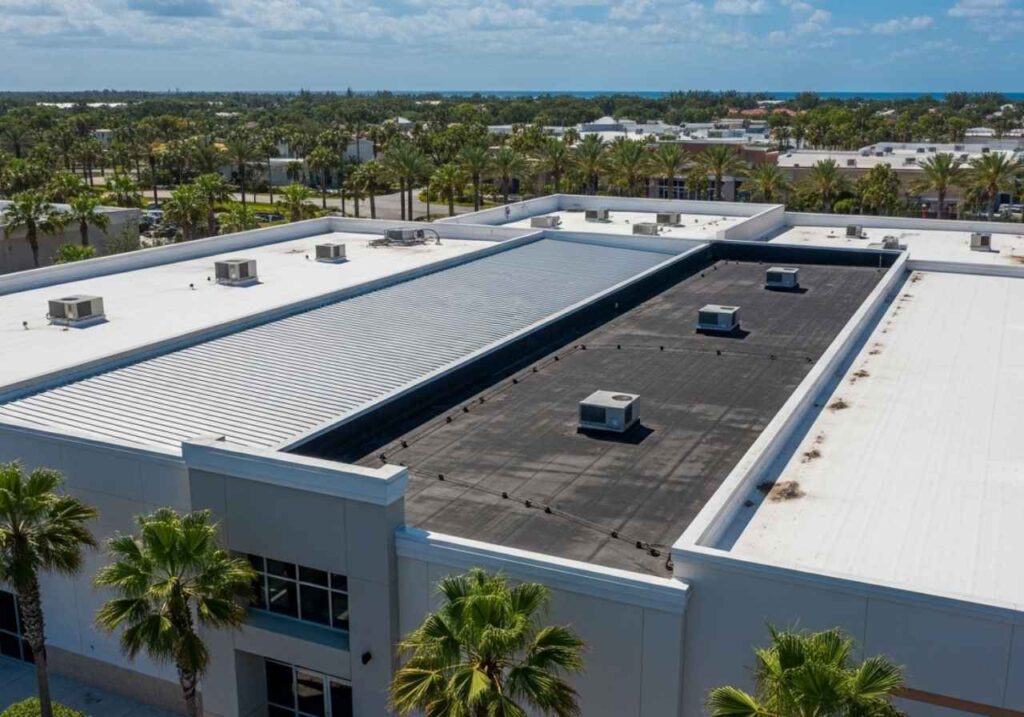
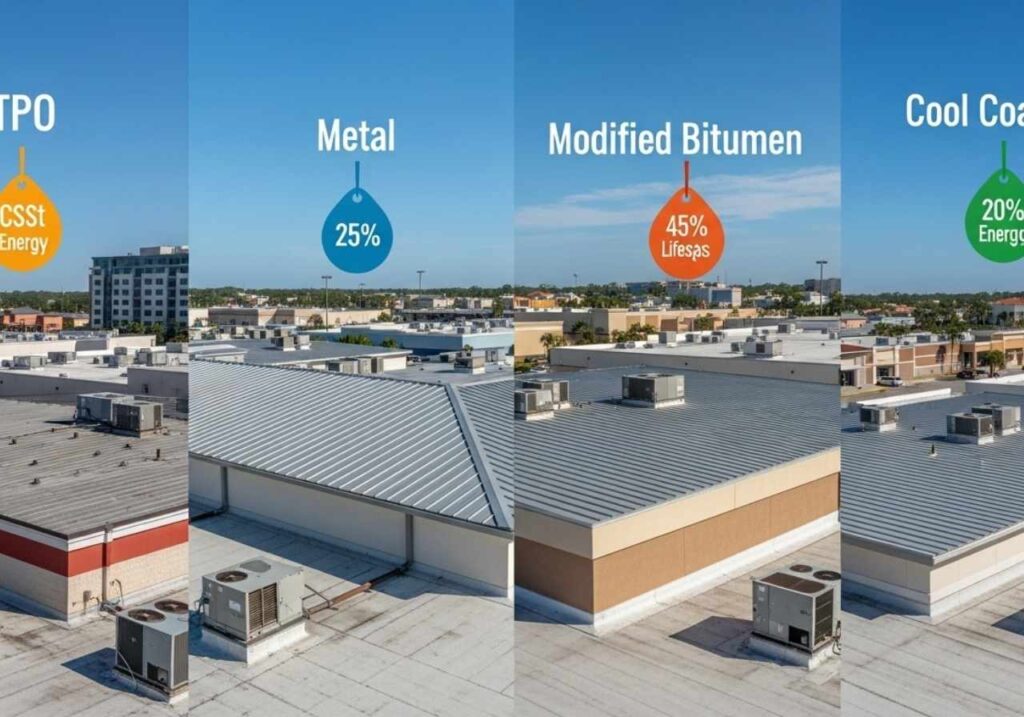
Retail buildings in Florida face tough conditions—intense sun, humidity, and hurricane-force winds. Choosing the right roofing system isn’t just about looks or cost. It’s a strategic decision that impacts building performance, energy bills, and tenant comfort. Let’s look at the four most common commercial roofing Florida systems used in retail centers: TPO, metal, modified bitumen, and cool roof coatings.
Key Roofing Systems for Retail Centers
Here’s how each option performs in Florida’s climate and retail environment:
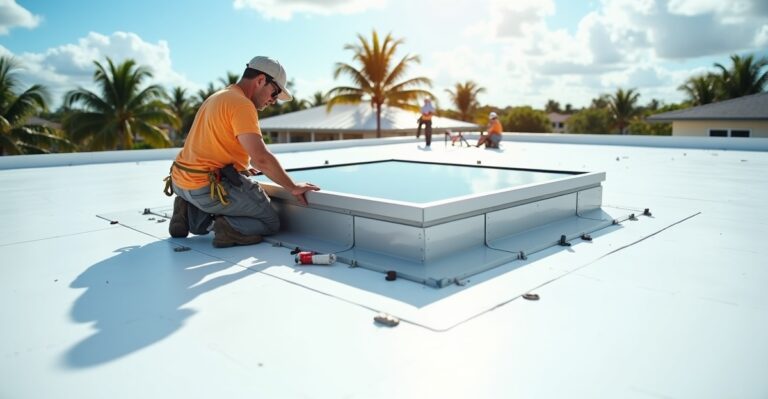
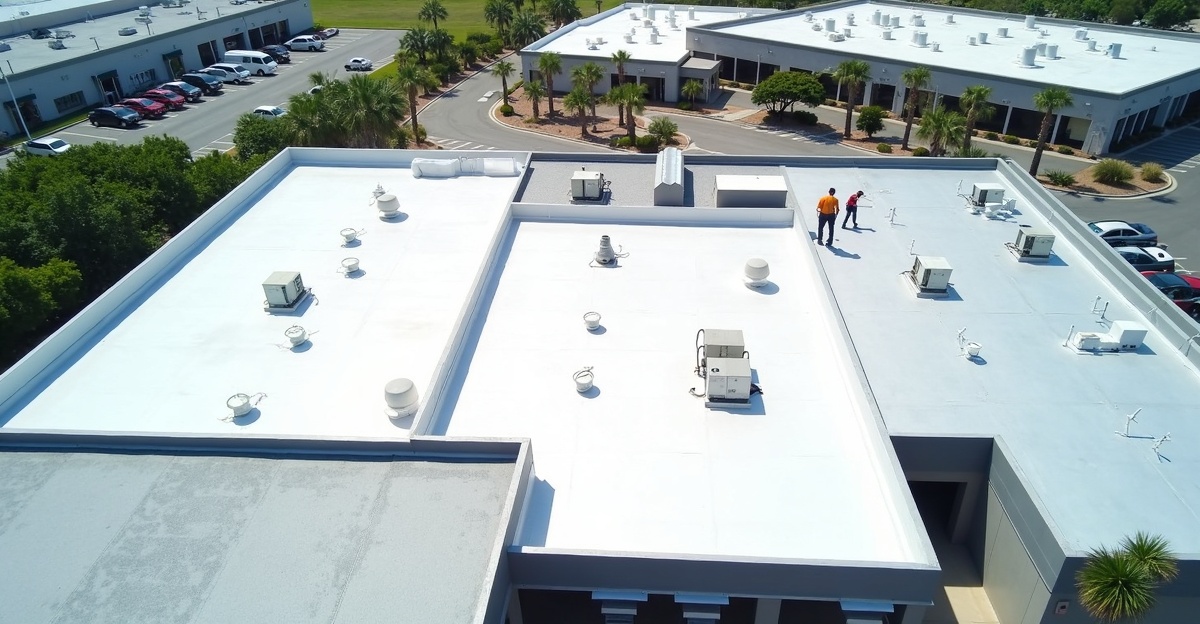
- TPO (Thermoplastic Polyolefin): This single-ply membrane is heat-reflective and energy-efficient. It’s known for its white surface, which helps reduce building heat gain. Popular because it’s cost-effective and easy to install.
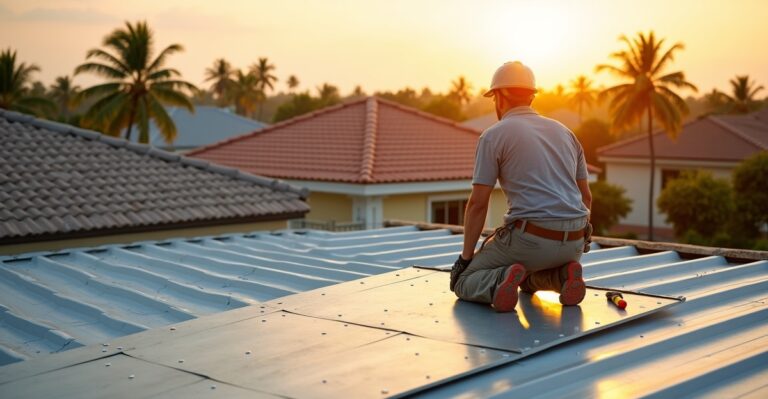
- Metal Roofing: Durable and long-lasting, metal systems resist wind, fire, and UV damage. They work well in high-visibility retail centers and offer an attractive, modern appearance.
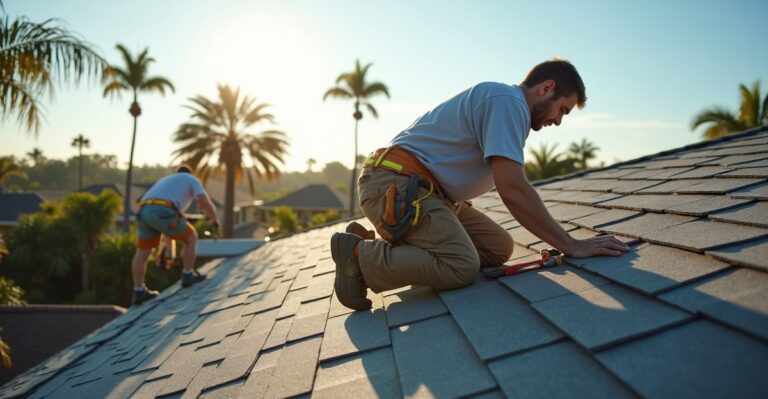
- Modified Bitumen: This multi-ply asphalt-based system holds up to foot traffic and resists punctures. Often used in retail centers with heavy rooftop equipment.
- Cool Roof Coatings: Applied over existing roofs, these coatings reflect sunlight, reducing indoor temps and HVAC load. A strong option for extending roof life and improving energy efficiency.
Each system has trade-offs:
- Walkability: Modified bitumen and some metal profiles handle routine rooftop foot traffic better.
- Aesthetics: Metal roofs often win on curb appeal.
- Energy efficiency: TPO and white reflective coatings rank high in hot, sunny zones.
- Moisture control: All four can perform well, but installation quality is key to preventing leaks, especially around penetrations.
For property managers focused on utility costs, cool roof systems in Central Florida can cut cooling loads significantly during peak months.
How Each System Stacks Up: A Florida-Specific Comparison
We’ve broken down the performance of top systems by factors that matter most to retail building owners:
Commercial Roof Comparison Guide
Here’s a quick snapshot:
- TPO: Lifespan: 15–20 years | Cost: $5–$8/sq ft | Maintenance: Low | Energy: High reflectivity | Best use: Budget-conscious with energy goals.
- Metal: Lifespan: 40+ years | Cost: $8–$12/sq ft | Maintenance: Low | Energy: Moderate to high | Best use: Long-term ROI, high visibility centers.
- Modified Bitumen: Lifespan: 12–20 years | Cost: $6–$9/sq ft | Maintenance: Moderate | Energy: Low unless coated | Best use: Heavy traffic, equipment-heavy rooftops.
- Cool Coatings: Lifespan: 10–15 years | Cost: varies widely | Maintenance: Low | Energy: High reflectivity | Best use: Roof restoration, heat reduction.
Retail centers often have rooftop HVAC units and regular maintenance staff access. Systems that withstand foot traffic without damage offer lower lifecycle costs. For energy-efficient roofing Florida solutions, TPO and cool coatings lead contenders.
To dive deeper into how different systems compare over time, check out our guide to flat roof lifespan and performance insights.
Hurricane Resilience and Code Compliance: What Retail Owners Must Know
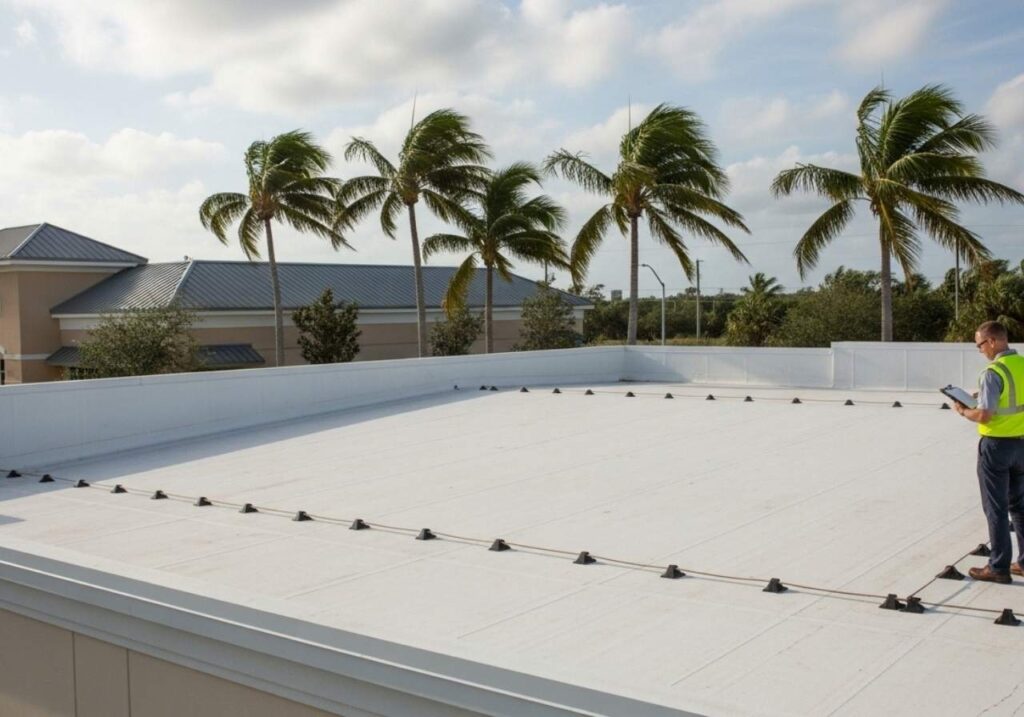
According to the Florida Building Code, commercial roofing systems must meet strict wind-uplift and impact resistance standards in hurricane-prone regions. Retail roofs must resist uplift, driven rain, and debris impact, often validated through ASTM wind-uplift testing standards for commercial roofing systems.
For hurricane-resistant roofing Florida solutions, it’s critical to ensure materials and systems meet:
- Wind-uplift criteria
- Roofing systems should meet Florida Product Approval requirements to ensure compliance and maintain insurance eligibility.
- Miami-Dade or local jurisdiction ratings
- Proper fastening systems and edge securement
Choosing roofing materials not approved for Florida’s wind zones can result in denied claims, as outlined by the Florida Office of Insurance Regulation’s property compliance guidance. Some insurers offer better premiums for code-compliant upgrades. We make sure every system we install meets those standards, whether it’s flat roof options for commercial buildings or high-wind rated sloped systems.
Cost vs. Value: What to Expect from Installation Through Lifecycle
Cost is always a factor, but long-term value means more than the initial price tag. Here’s what to expect:
- TPO: $5–$8/sq ft installed. Lower initial cost, solid energy savings.
- Metal: $8–$12/sq ft installed. Higher upfront cost, but low maintenance and 40+ year lifespan.
- Modified Bitumen: $6–$9/sq ft installed. Good for traffic areas, moderate upkeep.
- Coatings: Pricing varies. Check coating cost details here.
A properly applied roof coating can extend roof life and, as documented by the U.S. Department of Energy’s research on cool roofs, significantly reduce cooling loads in hot climates., which may influence whether you should repair or replace 20 year old roof systems.
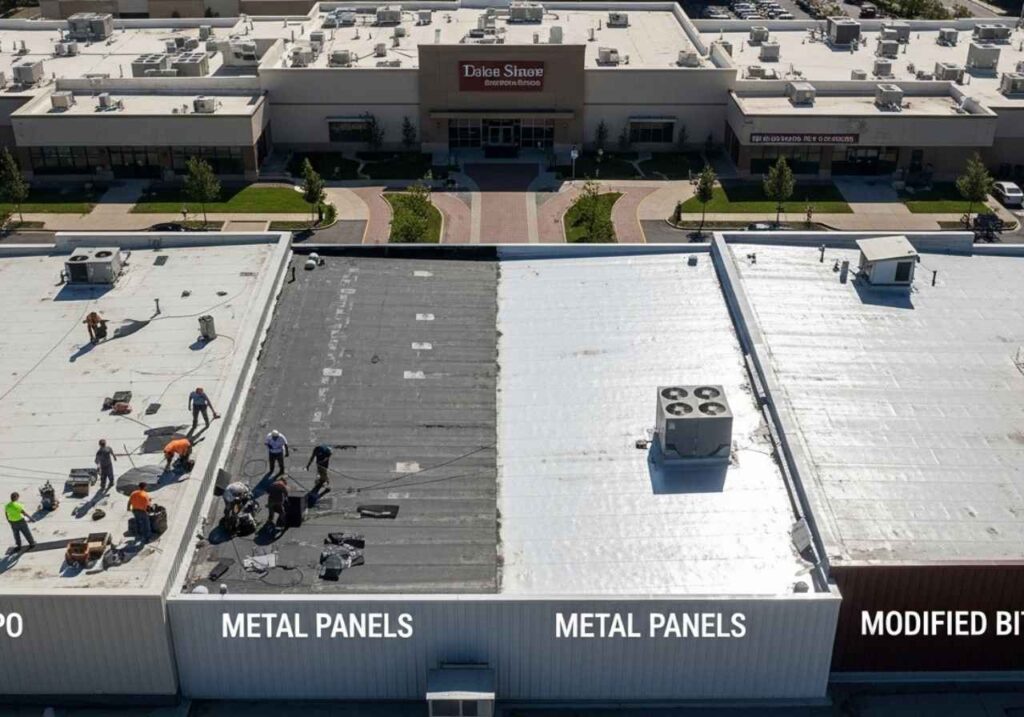
Retail plazas with shared HVAC units need walkable surfaces and easy access for maintenance. Single-ply membranes like TPO are fast to install and disrupt tenants less. We often recommend installation strategies that keep businesses running smoothly while upgrades happen.
Preventative Maintenance and Repair Considerations for Retail Centers
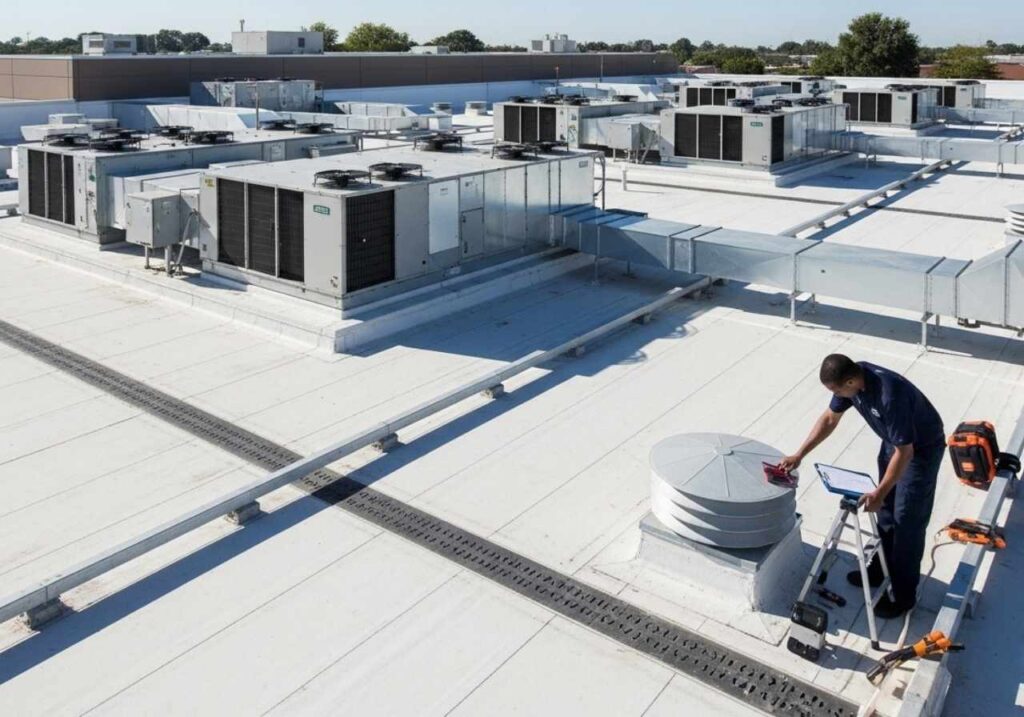
Keeping a retail roof problem-free takes planning. Common issues we see include:
Typical Repair Issues in Retail Roofing
- Leaks near HVAC boots and curbs
- Ponding water on low-slope areas
- Separated seams after storms or high winds
- Clogged scuppers and rooftop drains
To avoid surprise costs or tenant complaints, inspections should happen twice a year—especially before and after hurricane season—following a clear roof inspection timeline Florida property managers can rely on.
Systems like TPO and coatings support quick patching without the need for major tear-offs. Our maintenance reminder guide details timelines and checklists.
Warranty snapshots:
- TPO: 15–20 year manufacturer coverage
- Metal: Often 30–50 years
- Modified Bitumen: 12–20 years, depending on surfacing
We offer roof replacement or repair programs that include inspection plans to help extend system life without major disruption.
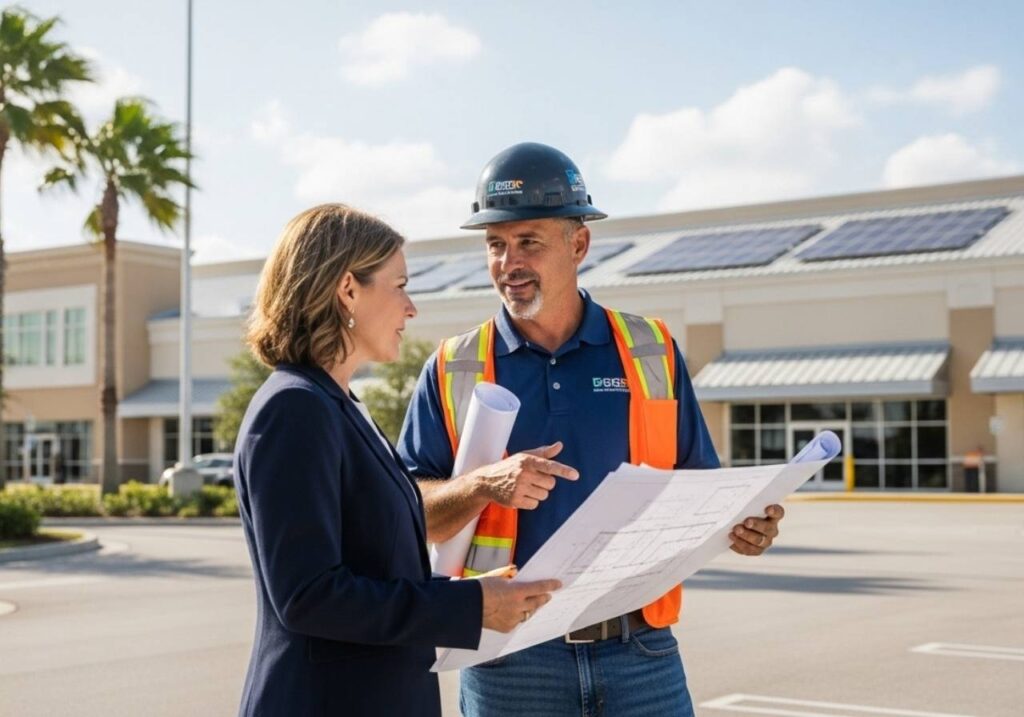
Choosing the Right Partner: What to Look for in a Roofing Contractor
Selecting a commercial roofing partner is just as important as the material. Look for a team with deep Florida know-how.
The right contractor should check all the boxes:
- Licensed and insured in Florida
- Experience with hurricane-resistant roofing Florida systems
- Familiar with local permitting and wind zone specs
- Transparent estimates and references you can call
At Pyramid Roofing Fla, we’re proud to offer roof installation for retail centers across Central and Northeast Florida. Every project comes with warranty-backed materials and install standards. We stand by our work and provide ongoing support with repair and maintenance programs.
If you’re weighing the best roofing retail centers Florida options, we’re ready to talk through what fits your property, budget, and long-term goals. Schedule a commercial roof consultation today, and we’ll help you move forward with confidence.
Frequently Asked Questions
The best roofing for retail centers in Florida is typically TPO, metal, or modified bitumen. TPO and cool roof systems reflect heat and reduce cooling costs, while metal roofs offer long lifespans and hurricane resistance. Modified bitumen works well for buildings with heavy rooftop traffic. The right choice depends on energy goals, foot traffic, and storm exposure.
Most commercial roofing systems for Florida retail centers last between 15 and 40 years. TPO roofs average 15–20 years, modified bitumen lasts around 12–20 years, and metal roofs can exceed 40 years. Proper installation, hurricane-rated materials, and regular maintenance significantly impact actual lifespan in Florida’s harsh weather conditions.
Cool roofs are often worth it for Florida retail centers because they reflect sunlight and reduce indoor heat gain. This lowers air conditioning demand, improves tenant comfort, and can reduce energy costs by up to 20%. Cool roof coatings are especially effective for extending the life of existing flat roofs without a full replacement.
Modified bitumen is usually the best roofing option for retail centers with frequent foot traffic. Its multi-layer design resists punctures from maintenance crews and HVAC servicing. Some metal roofing systems can also handle traffic, but single-ply membranes like TPO may require protective walk pads to prevent damage.
Yes, retail center roofs in Florida must meet strict hurricane and wind-uplift requirements. Roofing systems should comply with Florida Product Approval and, in some areas, Miami-Dade standards. Using non-rated materials can lead to roof failure or denied insurance claims, making code-compliant systems essential for long-term protection.