What Should You Do After Storm Damage to Your Roof?
After a storm hits, we need to act fast and stay organized. Clear steps reduce safety risks, protect our property, and make the storm damage roof repair process smoother. We start by checking for hazards and documenting damage. Then we schedule a professional inspection. This approach helps us stop hidden problems like weakened decking, damaged flashing, and moisture intrusion before they turn into expensive structural repairs.
Key Takeaways
- We prioritize safety by staying off the roof, watching for downed power lines, and checking interior areas for active leaks or electrical hazards.
- We document all visible exterior and interior damage with photos, videos, and written notes before we begin major storm damage roof repair.
- We inspect from the ground for missing shingles, damaged flashing, dented metal panels, loose tiles, and debris impact points.
- We recognize that hidden issues like torn underlayment, resealed lifted shingles, and wet insulation often require a professional evaluation.
- We use temporary protection like professional tarping to prevent further damage, then we rely on a qualified local contractor to decide whether repair or replacement offers the right long-term solution.
Check Safety First: Protect People and Prevent Further Damage
Storms move fast. The damage they leave behind can create hidden risks long after the skies clear.
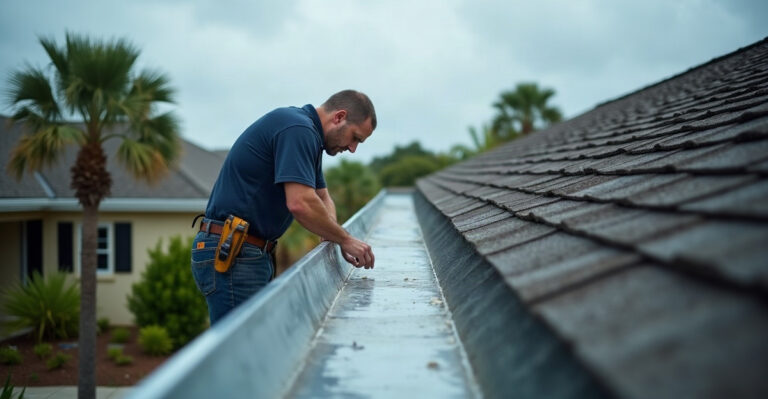
We advise staying off the roof entirely until a professional evaluates the situation. Wet shingles, loose tiles, and compromised decking increase fall risk. What looks stable from the ground may be unsafe overhead. A storm damage roof repair situation often involves weakened areas we cannot see right away.
Next, scan the area around the property. Watch for downed power lines, exposed wiring, and standing water near the building. These hazards demand immediate caution. If wires are involved, contact the utility company before taking any other steps.
Inside, check ceilings and attic spaces if it is safe to do so. Look for active leaks, bulging drywall, and water collecting near light fixtures. Place containers under drips to reduce interior damage. Turn off electricity to affected areas if water is nearing outlets or fixtures.
For commercial properties, restrict roof access immediately. Secure rooftop HVAC units if accessible from a safe area, and allow only authorized maintenance staff to approach the roof. Controlling traffic reduces liability and prevents injury while planning storm damaged roof repair.
It is important to move quickly, but safety comes first. We can repair a roof. We cannot reverse an avoidable injury.
Document Everything for Insurance and Next Steps
Thorough documentation supports a smoother insurance claim process and sets the stage for proper repairs.
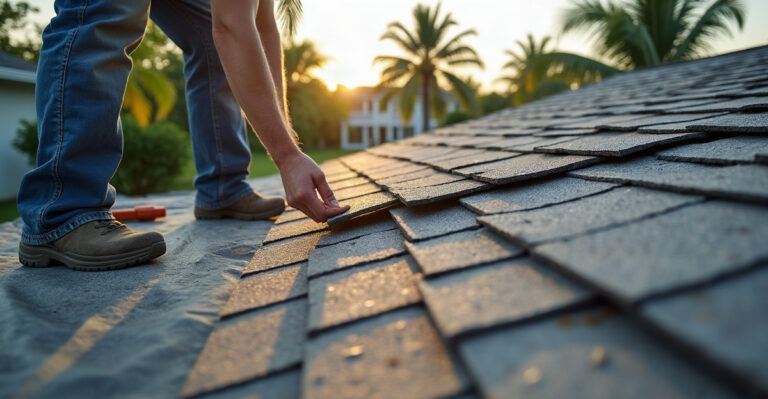
Start from the ground. Take clear, time-stamped photos and videos of visible damage. Capture missing shingles, cracked tiles, dented metal panels, debris impacts, and fallen tree limbs. If the building is safe to enter, photograph interior issues like ceiling stains, wet insulation, peeling paint, or damaged inventory in commercial spaces.
Keep a written log. Record:
- The date and approximate time of the storm
- The type of storm (tropical storm, hurricane-force winds, hail)
- When leaks or other problems were first noticed
Contact the insurance provider promptly. In many storm damage roof repair Florida claims, policies have reporting deadlines after named storms. Delays can affect coverage. Before authorizing major work, confirm next steps with the adjuster. Emergency tarping or water mitigation is typically allowed to prevent further damage. Save every receipt for those services.
Clear roof inspection documentation strengthens the claim and reduces back-and-forth later. For those unsure where to begin, we have outlined the steps in filing a roof insurance claim after a storm and explained insurance coverage for storm damage in detail.
Act with urgency, but stay organized. Good records protect the property and support fair claim resolution.
Inspect from the Ground: Know the Visible Signs of Storm Damage
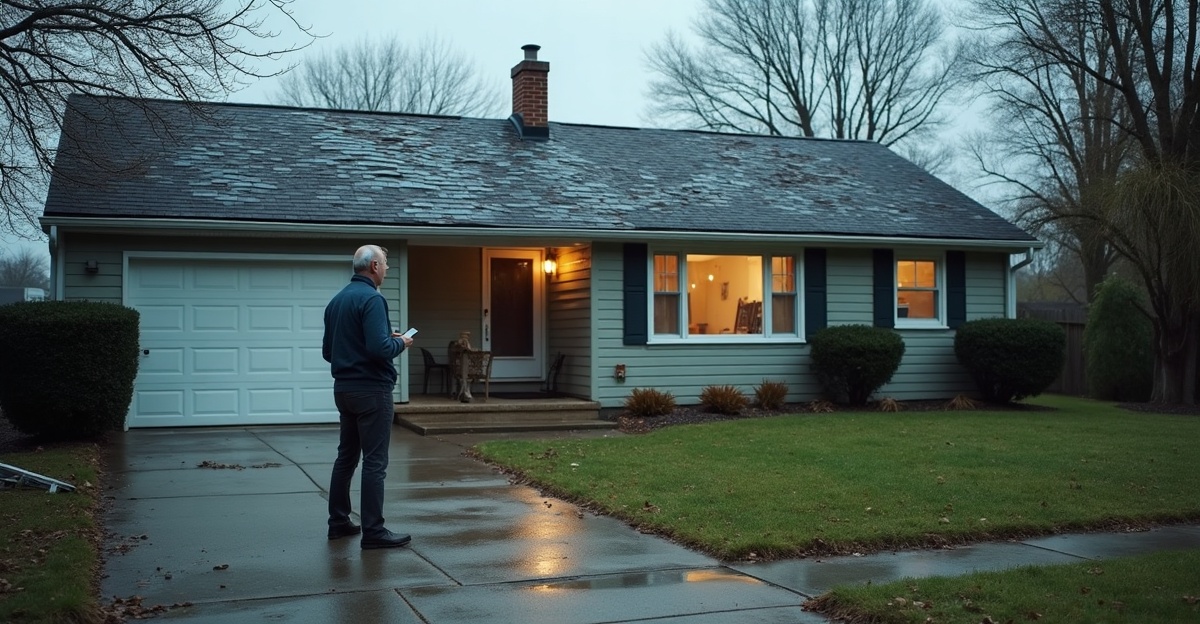
A careful walk around the property reveals valuable clues. We recommend inspecting from ground level only.
Pay attention to these visible signs:
- Missing, cracked, or curled shingles
- Granules from asphalt shingles collecting in gutters
- Dented or lifted metal roofing panels
- Broken or displaced tile roofing
- Damaged flashing around chimneys, vents, and skylights
- Debris impact points where branches or objects struck the surface
Flashing is the thin metal installed around roof transitions to keep water out. If flashing lifts or bends, water can seep in even if shingles look intact.
For flat or commercial systems, look for punctures, standing water (ponding), and loose seams. Ponding water adds weight and eventually finds entry points.
Florida’s weather patterns make small issues worse quickly. Wind-driven rain pushes water under shingles. Hurricanes create uplift that weakens nail holds. Intense heat can dry out materials after a storm, masking underlying problems until the next rainfall.
Those researching storm damage roofing near me often discover that what seems minor from the yard can still require prompt storm damage roof repair. Early action usually means simpler fixes and lower overall cost.
Don’t Miss Hidden Damage: What You Can’t See from the Yard
Not all storm damage is visible from outside. Interior checks add another layer of protection.
If safe, inspect the attic. Look for wet insulation, dark streaks along the roof decking, or sunlight shining through boards. A musty odor often signals moisture intrusion and possible mold growth.
Under the shingles or tile sits the underlayment. This is the water-resistant layer that acts as a secondary barrier. Even if the surface looks intact, wind can tear or wrinkle the underlayment. Once compromised, it allows water to move slowly into the structure.
Lifted shingles are another common issue in Florida. After strong winds, shingles may reseal in the heat of the sun. They appear flat again but have weakened adhesive strips. Months later, they can fail during the next storm.
Commercial buildings face similar risks. Bubbling paint on interior ceilings often means water has traveled along decking. On flat roofs, membrane separation can start small and expand over time.
Hidden damage is a common reason storm damaged roof repair becomes more extensive when delayed. A timely professional evaluation limits structural deterioration and protects insulation, framing, and interior finishes.
Temporary Protection vs. Permanent Storm Damage Roof Repair
Temporary measures serve one purpose: prevent additional damage until permanent repairs begin.
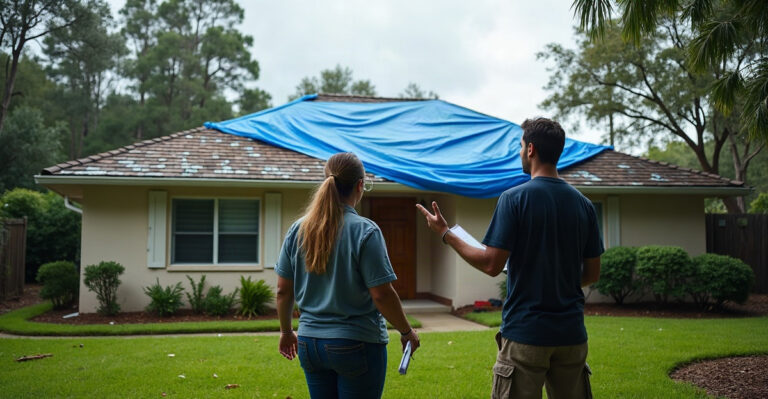
Professional tarping is the most common immediate solution. It shields exposed areas from rain and debris. Minor sealants may help in specific situations. The advantage is clear. We reduce water intrusion right away.
The downside needs attention. Temporary materials are not long-term fixes. Improper installation can void warranties or create new entry points. For that reason, experienced crews should handle emergency stabilization. For a breakdown of potential pricing, we have explained emergency roof repair costs in detail.
Permanent storm damage roof repair depends on the severity of impact. Common repairs include:
- Replacing missing shingles or cracked tiles
- Repairing or replacing flashing and sealing penetrations
- Installing new sections of underlayment
- Replacing damaged roof decking
In severe cases, partial or full roof replacement may be the safer path.
Several factors guide the repair-versus-replace decision:
- Roof age
- Extent of structural damage
- Current Florida building codes
Localized damage on a relatively young roof often qualifies for targeted roof repair. Widespread uplift, saturated decking, or large sections of compromised material typically justify replacement.
Balanced guidance matters. Replacement should only be recommended when structural integrity is at stake. The right solution protects the property and respects long-term value.
What to Expect from a Professional Inspection in Central and Northeast Florida
A qualified contractor follows a thorough process. We perform both exterior and interior inspections to identify visible and hidden damage.
The evaluation includes shingles, tile, metal panels, flashing, sealants, and flat roof membranes. We assess attic ventilation and moisture levels. On commercial properties, we examine rooftop equipment and drainage systems to ensure storm debris has not caused hidden strain. When needed, we provide documentation suitable for insurance submission.
Clear communication defines a reputable contractor. We review findings in everyday language. We explain what is urgent and what can be monitored. We outline repair options with honest pros and cons. Written estimates detail the scope of work and materials. Quality storm damage roof repair Florida projects should also include warranty-backed services.
Local experience matters. Hurricanes, tropical storms, and high heat create specific stress patterns on shingle roofs and other systems. We have detailed how hurricanes affect shingle roofs in Florida for those who want deeper insight into those patterns.
Property owners researching storm damage roofing near me often want fast answers. A professional inspection delivers clarity without pressure. If storm impact is suspected, scheduling a comprehensive evaluation through our storm damage repair services team provides a clear path forward.
Strong roofs protect our homes, families, employees, and neighbors. Taking organized, informed steps after a storm keeps that protection intact and restores peace of mind throughout our Florida communities.