Roof Coating Blisters: Causes, Risks, and Repair Tips
Roof coating blisters are raised pockets that develop when moisture, vapor, or air collects beneath a coating. They can also form when a coating separates from the roof surface. Small, firm blisters may remain isolated. Soft, spreading, ruptured, or leak-related blisters need a professional inspection. We check the coating, substrate, drainage, and roof system.
Key Takeaways
- Roof coating blisters don’t always indicate a leak or require roof replacement. We recommend documenting and monitoring them.
- Trapped moisture, poor surface preparation, incompatible materials, improper application, aging roof materials, and standing water can cause blistering.
- Florida heat, UV exposure, humidity, wind-driven rain, and storm damage can place added stress on low-slope roof coating systems.
- Don’t puncture or peel a blister. This can create an entry point for water and damage the roof surface.
- Professional repairs may include removing failed coating, drying and repairing the substrate, improving drainage, and applying a compatible coating system.
What Roof Coating Blisters Are—and Whether They Mean Roof Damage
A blister does not automatically mean a roof is leaking or needs full replacement. Roof coating blisters are raised bubbles or pockets that form when a coating loses adhesion or when air, moisture, or vapor becomes trapped beneath it.
A coating is a liquid-applied protective layer installed over an eligible roof surface. The substrate is the surface beneath that coating, such as a membrane, metal panel, or modified bitumen roof. Adhesion describes how well the coating bonds to that surface, while a roof membrane is the waterproofing layer found on many low-slope commercial roofs.
Some roof coating blisters are small, isolated adhesion concerns. Others can point to trapped moisture under roof coating, aging roof materials, or damage within the roof system. Ponding water—water that remains on a roof for an extended period after rainfall—can also add stress to a low-slope roof coating.
Coatings are common on low-slope commercial roofs and may also work well on eligible residential metal roofs or low-slope roof areas. They are not a universal solution for every shingle roof. Understanding how roof coatings work helps property owners recognize why surface condition and proper application matter so much.
When Roof Coating Blisters Need Prompt Attention
Small blisters do not always require emergency work, but they do deserve attention. Monitor and document blistering that is isolated, small, firm, dry, and not increasing in size. Take photos, note the location and approximate dimensions, and record when it appeared. Include recent storms, leaks, roof work, or ponding water in those notes.
Schedule a prompt roof coating inspection if blisters feel soft or spongy, spread across the roof, recur after repairs, or rupture. Prompt evaluation is also important when a blistered roof coating exposes the substrate, separates or peels, or appears near seams, flashing, roof penetrations, or previous repairs.
Active leaks, ceiling stains, moldy odors, or interior moisture damage require fast action. The same applies to blistering in areas with recurring ponding water or after wind-driven rain, debris impact, or storm damage. Soft, spreading, or ruptured roof coating blistering can allow water to reach the membrane or substrate. An in-person assessment is the only dependable way to identify the cause and determine whether roof leak repair is needed.
We do not recommend puncturing, cutting, peeling, or patching a blister without a professional diagnosis. Opening it can create a new water-entry point, harm the roof membrane or substrate, and potentially affect warranty coverage.
What Causes Roof Coating Blistering in Florida?
Roof coating blistering needs an on-roof diagnosis because several conditions may contribute at once. Trapped moisture under roof coating is a frequent cause. Moisture may already be present in the roof system or substrate before the coating goes on, then heat causes vapor pressure to build beneath the surface.
Coating adhesion failure may also result from inadequate cleaning, drying, priming, or surface preparation. Applying a coating during unsuitable weather, using an incompatible product, applying it at the wrong thickness, or not allowing proper cure time can all affect performance.
Central and Northeast Florida roofs face intense UV exposure, high heat, humidity, wind-driven rain, hurricanes, and debris events. Heat and UV can intensify vapor pressure. Humidity and condensation can introduce moisture concerns. Storms can damage seams, flashing, penetrations, and roof edges, allowing water into vulnerable areas.
Ponding water and poor drainage deserve close attention on low-slope roofs. Water that sits after rain can increase stress on the coating and may reveal drainage or roof-slope concerns. Age-related deterioration of the existing roof material can further limit coating adhesion.
Different coatings react differently to moisture, heat, and roof movement. Acrylic, silicone, polyurethane, asphalt-based, and other systems each have specific application requirements. The substrate matters too, whether the roof has metal, modified bitumen, a single-ply membrane, or another roofing system. Weather plays a role, but preparation, compatibility, roof condition, and drainage are equally important parts of Florida roof maintenance.
Can a Blistered Roof Coating Be Repaired?
Roof coating repair may be possible, but the correct approach depends on the coating material, roof type, moisture conditions, size of the affected area, and condition of the underlying roof system. A localized adhesion issue may need a different solution than broad blistering caused by moisture beneath the membrane.
Qualified repairs may involve removing failed coating sections, drying and repairing the substrate, correcting damaged seams or flashing, repairing penetrations, or addressing damaged membrane areas. Drainage improvements may also be necessary where recurring ponding water affects the roof. After proper preparation, compatible areas may be recoated as part of a roof restoration plan.
A repair that works on silicone may not suit acrylic, polyurethane, or asphalt-based systems. Product compatibility is essential. Learn why roof coating removal may be necessary before any new coating system is applied over failed material.
Restoration coatings can extend the service life of an eligible roof, but they cannot replace severely deteriorated materials. Widespread wet insulation, major membrane damage, structural concerns, recurring leaks, or broad coating failure may make roof replacement the sounder long-term choice.
Repair costs vary with roof size, access, roof and coating type, preparation needs, moisture damage, drainage corrections, repair scope, and local labor conditions. A clear inspection report helps us recommend work that addresses the actual issue instead of treating only the visible blister.
What a Qualified Roofing Inspection Should Evaluate
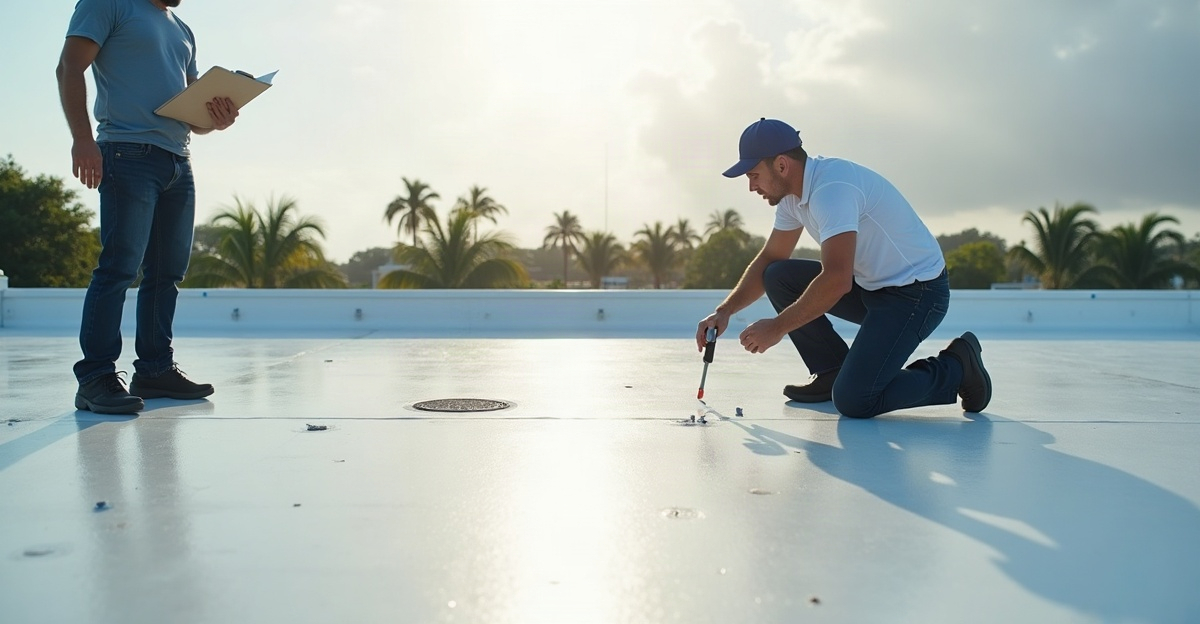
A professional roof coating inspection helps distinguish a localized coating concern from an underlying roof-system issue. We evaluate the location, size, pattern, and condition of roof coating blisters, along with adhesion and coating thickness where relevant. Moisture investigation methods vary by roof system and site conditions.
Inspection should also cover seams, flashing, penetrations, roof edges, prior repairs, roof age, maintenance history, drainage performance, and recurring ponding water. Storm-related damage and wind-driven rain exposure matter, particularly after a Florida storm season. Our storm damage repair team can assess roof impacts that may have contributed to coating separation or moisture entry.
For commercial roofing properties, findings should account for maintenance records, warranty requirements, tenant or business disruption, drainage corrections, and phased scheduling. Documenting the roof condition before major work supports better decisions and clearer planning.
Inspection findings should guide the repair scope. Roof coating blisters do not automatically require replacement. In many cases, a focused repair, drainage correction, or compatible recoating may be the appropriate path. For eligible systems, roof coating services can support practical restoration work after the roof is properly evaluated.
Preventing Future Blistering and Common Questions
Prevention starts with regular inspection and prompt maintenance. Schedule evaluations after hurricanes, heavy rain, or debris events. Keep drains, scuppers, gutters, and drainage paths clear where applicable. Repair damaged seams, flashing, penetrations, and membrane areas before recoating, and correct ponding water concerns rather than coating over them.
Compatible coating systems, proper surface preparation, suitable weather conditions, and adequate cure time all reduce the risk of future coating adhesion failure. Commercial property teams should retain inspection reports, photos, repair records, and warranty documents. Our guide to flat roof maintenance offers additional steps for protecting low-slope roofing systems.
Property owners in Central and Northeast Florida should request a professional inspection if blistering is spreading, ruptured, recurring, connected to leaks or ponding water, or difficult to assess safely. An inspection helps determine whether the concern is isolated to the coating or involves the roof system below.
Common Questions About Roof Coating Blistering
What causes blisters in a roof coating? Moisture, vapor pressure, poor surface preparation, incompatible materials, application concerns, aging roof materials, drainage problems, and storm damage can all contribute.
Do roof coating blisters mean the roof is leaking? No. A firm, isolated blister may not indicate a leak. Soft, ruptured, spreading, or moisture-related blistering needs prompt evaluation because it can allow water to reach the underlying system.
Can a blistered roof coating be repaired? Often, yes. The repair depends on the coating type, substrate condition, moisture findings, and extent of the failure. Some roofs can be repaired and recoated, while widespread damage may require restoration or replacement.
Should we pop a blister in a roof coating? No. Puncturing a blister can damage the roof surface and create a path for water intrusion. Professional diagnosis should come first.
Are roof coating blisters common in Florida? Florida heat, UV exposure, humidity, wind-driven rain, and ponding water can contribute to blistering. Still, local weather is rarely the only factor. Roof preparation, coating compatibility, drainage, and maintenance also matter.
When does blistering mean a roof should be replaced instead of recoated? Replacement may be appropriate with widespread wet insulation, severe membrane deterioration, structural concerns, broad coating failure, or repeated leaks that repairs cannot resolve.
Can ponding water cause roof coating blistering? Ponding water can add stress to a low-slope roof coating and may worsen existing adhesion or moisture concerns. Drainage should be evaluated before recoating or restoration work proceeds.