How Do Flat Roof Drains Work?
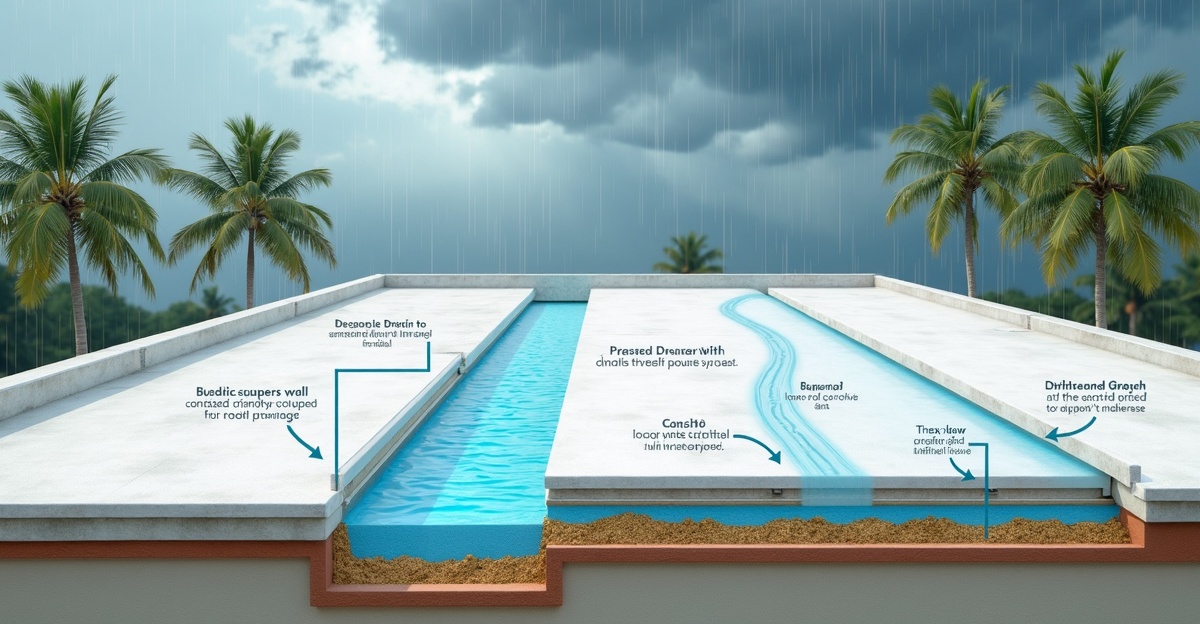
Understanding how flat roof drains work helps protect Florida homes and buildings from water damage. With heavy rain and frequent storms, efficient drainage is critical. This guide breaks down how internal drains, scuppers, gutters, and tapered insulation work together to prevent water accumulation, leaks, and expensive repairs.
Key Takeaways
- Flat roofs in Florida use a slight slope that directs water toward specific drainage points. These roofs aren’t designed to store water.
- Common drainage methods include internal drains for large buildings, scuppers for mid-sized roofs, and gutters suited to smaller homes.
- Tapered insulation beneath the roof membrane improves water flow by channeling runoff to proper exit areas.
- Drainage issues often come from blocked paths, poor slope planning, or clogging within the system.
- Routine inspections and seasonal upkeep help reduce debris buildup and catch problems early—like standing water or sagging spots—before they escalate.
Why Proper Drainage Matters on Florida Flat Roofs
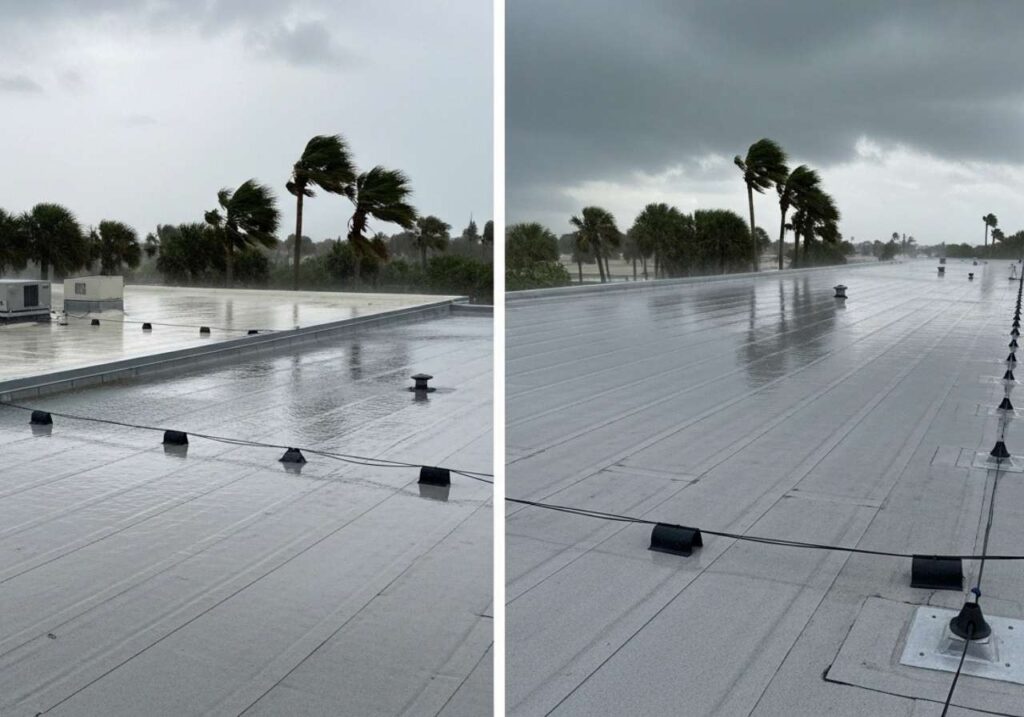
Florida’s weather puts flat roofs to the test. Between heavy summer downpours, frequent thunderstorms, and hurricane season—conditions reflected in official Florida rainfall and storm data—water management isn’t optional—it’s foundational. A well-installed flat roof drainage system in Florida—designed with long-term performance in mind and aligned with key flat roof system benefits—helps move rainwater off the surface quickly, before it has time to do damage.
Poor drainage leads to flat roof water pooling, which can strain the roof structure and invite leaks. Left unchecked, it creates opportunities for mold, interior water damage, and even compromised insulation, especially in humid climates where moisture-related mold growth risks are well documented. If water remains pooled for over 48 hours after a storm, it can also shorten the roof’s life and potentially conflict with Florida Building Code flat roof drainage requirements, particularly for commercial buildings.
There’s a common myth that flat roofs are meant to hold water. That’s not true. Even though they look level, they’re built with a slight pitch to encourage water flow, consistent with industry-recommended minimum slope standards for low-slope roofs. Standing water is a red flag—one that shouldn’t be ignored, as it’s often one of the signs roof needs replacement.
How Flat Roof Drainage Systems Work
So, how do flat roof drains actually work? Even flat roofs aren’t perfectly flat. They have a subtle slope that channels water in specific directions. The goal is to reduce stagnant water and direct stormwater into designated exit points.
Core Components and Flat Roof Drainage Details of a Flat Roof Drainage System
There are several ways water gets off a flat roof. The type of drainage used depends on the building size and design:
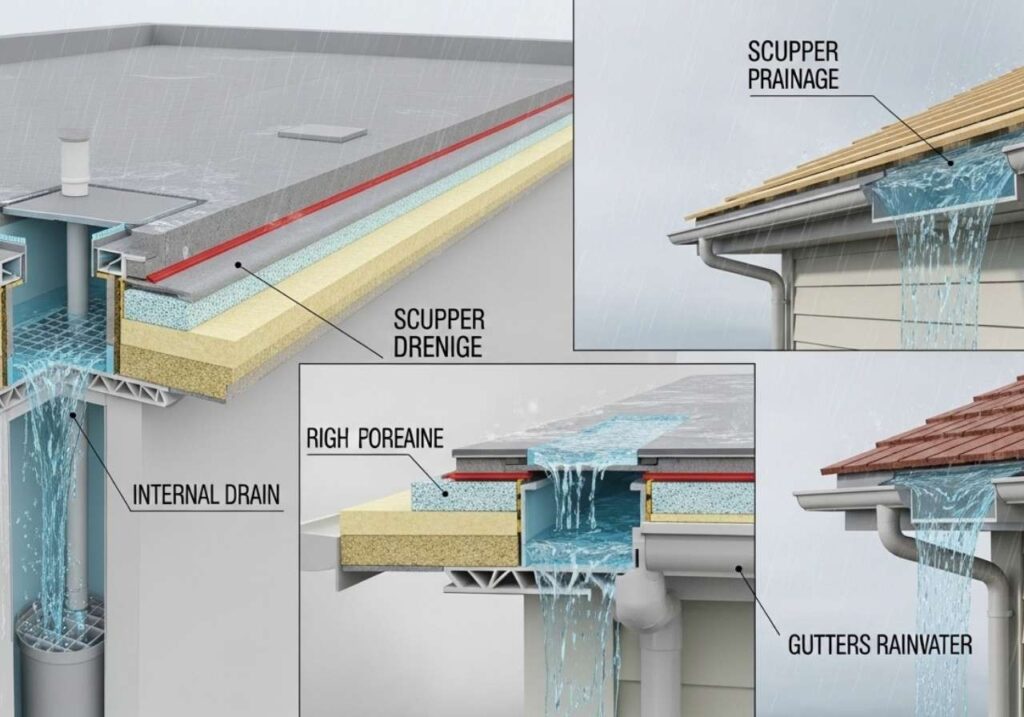
- Internal Drains: These interior roof drains are located in the center of the roof and hidden from view. Water slips through grates and travels through vertical pipes inside the structure, exiting below through a roof storm drain system. Effective for large roofs, but they must be kept clear to avoid blockages.
- Scuppers: These are openings cut into the edge or parapet wall of the roof that function as a flat roof drainage channel, directing water out and into downspouts. They require correct slope and size, but are simple and effective, especially for mid-sized roofs.
- Gutters: Found along the outer edges and common on smaller homes, functioning as practical residential roof drains. Gutters catch water and direct it through downspouts, though they clog easily with leaves during storms—making it important to understand the soffit fascia repair benefits that help protect the roof edge and support proper drainage.
- Tapered Insulation: A sloped insulating layer installed under the waterproof membrane, it silently helps water move to the drains and supports the performance of an energy efficient flat roof Florida property owners can benefit from.
Think of the roof like a shallow dish. The gradual slope works like tilted edges guiding water to a straw—or in this case, a drain. Each part must work together to keep the surface dry and sound.
For more on the value of these features in Florida homes, explore the specific benefits of flat roof systems for Florida.
Comparing Drain Types: Choosing the Right System
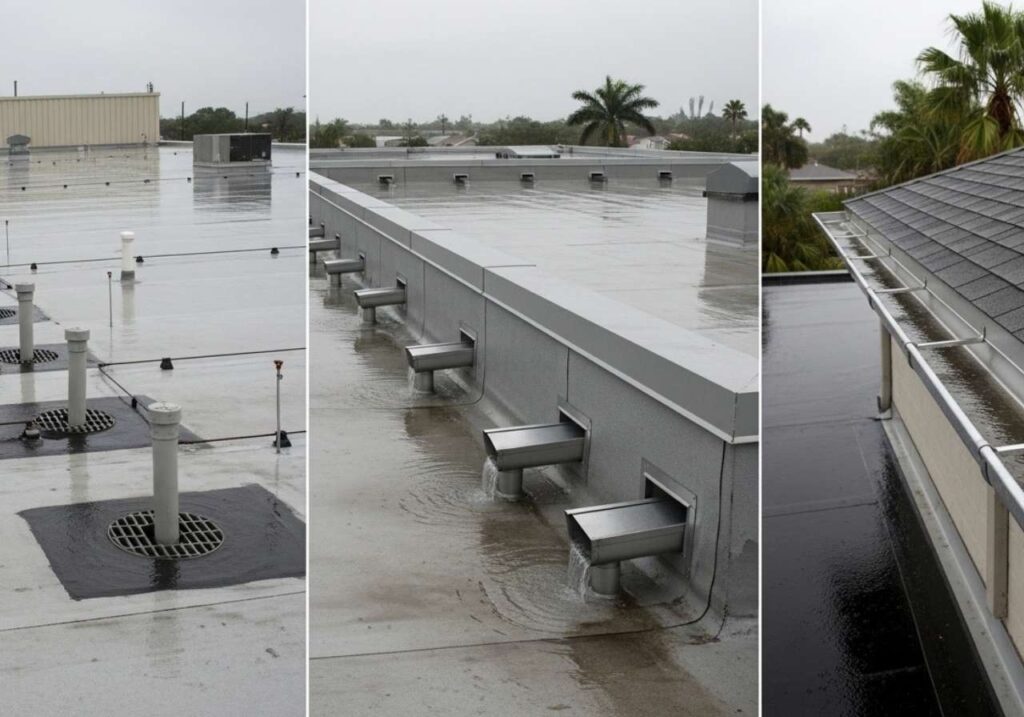
Not all drainage designs fit every roof. When comparing internal drains vs. scuppers vs. gutters, we look at building size, roof shape, and maintenance access.
- Internal Drains: Common on commercial flat roof drainage systems and often referred to as commercial flat roof drains. They’re ideal for spanning large areas and keeping the visible roofline clean. But they involve complex pipework and need regular cleaning to prevent debris buildup.
- Scuppers: Easier and cheaper to install. They’re effective if your roof has a reliable pitch directing flow their way. However, they lose efficiency if the roofing doesn’t lead water toward them.
- Gutters: A solid choice for small, residential roofs. They’re familiar and accessible—but storm debris like branches and leaves can block them quickly in a Florida thunderstorm.
Each system needs to support both daily rainfall and extreme weather. Florida building codes—especially for large or commercial structures—may mandate certain configurations to meet stormwater management goals.
For individualized help selecting the right flat roof drainage design, our team can recommend roof installation solutions that align with both code and climate.
How to Spot Drainage Trouble Early
Flat roofs don’t always leak right away. But they do send signals when draining problems start.
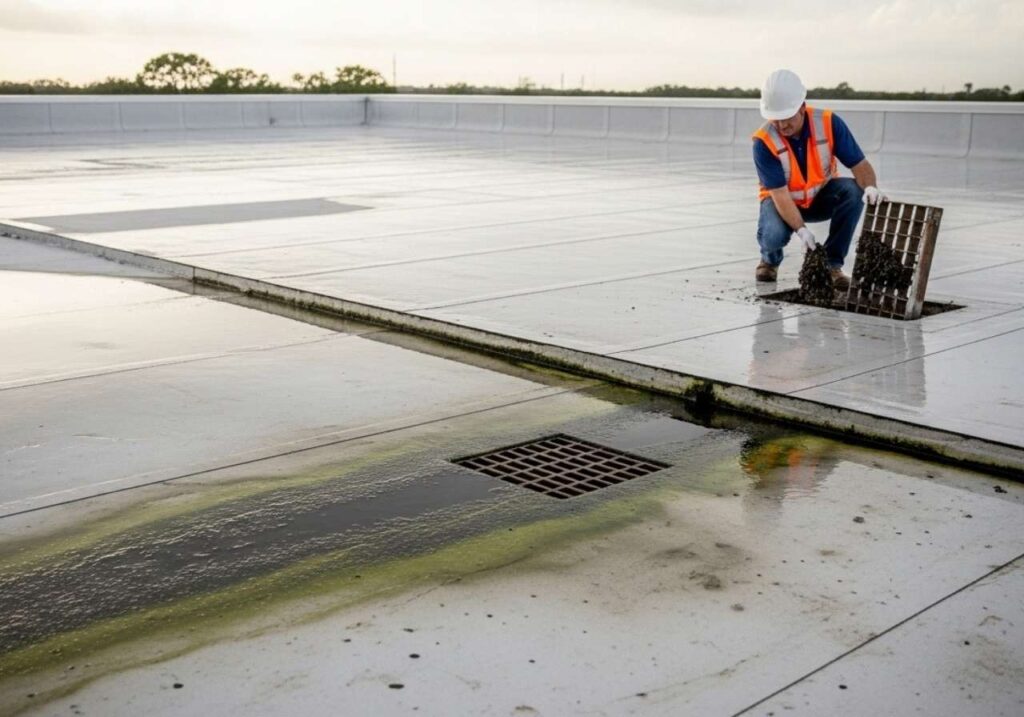
Look for These Signs of Poor Roof Drainage
Keep an eye out for these early warnings:
- Puddles that stick around more than 48 hours after a rainstorm
- Sagging spots or low dips that consistently collect water
- Dark streaks, algae, or moss growth in specific roof areas
- Interior water marks on ceilings or high walls, even if the roof looks fine
We often discover during flat roof inspections that clogged internal drains or incorrect roof slope are behind repeated leaks that didn’t show up immediately. Just because there’s no current ceiling stain doesn’t mean there’s no damage.
For an example of how small issues can escalate, our post on how small leaks lead to major damage explains the risks of letting drainage issues go unchecked.
Preventing Problems: Flat Roof Maintenance Tips
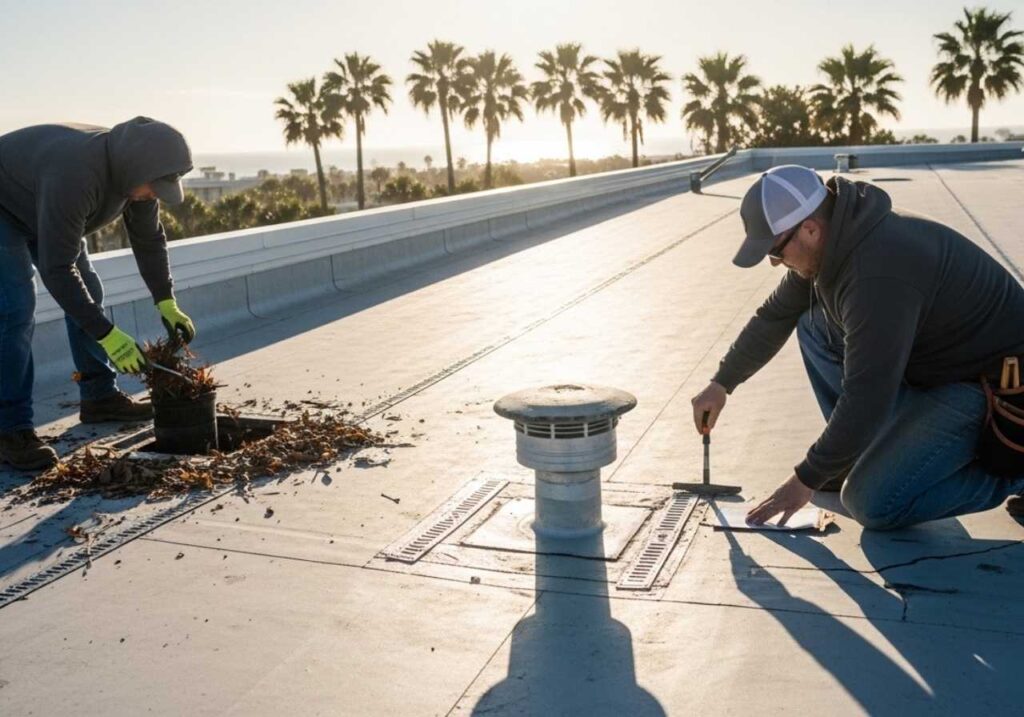
Preventing drainage issues means catching them before they escalate. Florida roofs, especially flat ones, deserve frequent inspection due to constant exposure to sun, salt, and storm activity.
A Simple Maintenance Checklist
These practical flat roof maintenance tips help keep drains flowing and water damage at bay:
- Inspect the roof twice a year—before and after hurricane season works best
- Clear leaves, twigs, and acorns around scuppers, drain covers, and gutters
- Ensure sloped insulation is directing water as designed—pools in the same spot every storm could mean adjustment’s needed
- Look for:
- Blocked or missing drain covers
- Cracked or loose flashing near drains
- Membrane blisters or punctures near drainage zones
Seasonal cleaning and visual checks go a long way. But professional inspections catch deeper problems that might not be obvious. For more guidance, check out how often flat roofs should be maintained.
Need a pro to check for more than debris? We offer roof repair and flat roof drainage solutions that target long-term performance.
Need Expert Eyes on Your Roof?
We know how unpredictable Florida weather can be. With decades of experience as a trusted roofing contractor in Central Florida, we’ve seen the damage poor drainage causes—but we’ve also helped hundreds of property owners stop it before it spreads.
Whether you’ve noticed recent pooling or just want peace of mind before storm season, we’re here to help. Our no-obligation flat roof drainage inspections give a clear review of your system’s performance today—plus honest advice on any steps needed next.
We’re proud to support our local community with service that’s never rushed, never exaggerated, and always focused on protecting your investment. If you’re looking for real roof drainage solutions in Florida, contact our team to schedule your check-up today.
Let’s keep water moving where it belongs—off your roof and away from your building.
Frequently Asked Questions
Flat roof drainage in Florida works by using a slight slope to guide rainwater toward drains, scuppers, or gutters. Even though the roof looks level, it’s designed to move water continuously. This prevents ponding during intense storms, which are common in Florida’s climate, and reduces the risk of leaks, structural stress, and premature roof failure.
Standing water is a problem because it adds constant weight and accelerates roof deterioration. In Florida’s heat and humidity, pooled water can break down roofing materials faster and increase the chance of mold and interior damage. Water that remains for more than 48 hours is often a sign of drainage failure and should be addressed quickly.
The most common flat roof drainage systems in Florida include internal drains, scuppers, and gutters. Internal drains are typical for large or commercial buildings, scuppers are often used on mid-sized roofs with parapet walls, and gutters are common on small residential structures. The right choice depends on roof size, layout, and maintenance access.
You can tell a flat roof has drainage issues if water puddles remain long after rainfall, low spots keep collecting water, or stains appear on ceilings or walls. Other signs include algae growth and sagging roof sections. These symptoms often point to clogged drains, poor slope design, or insulation problems beneath the surface.
Flat roof drainage should be inspected at least twice a year in Florida, ideally before and after hurricane season, in line with professional roof inspection frequency recommendations for storm-prone regions.
Regular inspections help remove debris, check drain openings, and identify slope or membrane issues early. Frequent checks are especially important after major storms, as wind and debris can quickly block drainage paths.