How to Choose a Concrete Roof Replacement Contractor
Choosing the right concrete roof replacement contractor requires a clear understanding of when repairs no longer deliver value. As roofs age in Florida’s harsh climate, we often find that a full replacement provides stronger protection and better long-term performance. A reliable contractor evaluates structural integrity, underlayment condition, ventilation efficiency, code compliance, and warranty coverage before recommending next steps.
Key Takeaways
- We confirm the contractor holds an active Florida license, carries general liability and workers’ compensation insurance, and understands current local building codes.
- We choose a contractor with verified concrete tile expertise, manufacturer certifications, and a strong local portfolio of completed replacement projects.
- We request a detailed written estimate that clearly outlines scope, materials, structural repairs, permits, timeline, and separate workmanship and manufacturer warranties.
- We expect a thorough inspection that reviews decking condition, load capacity, ventilation performance, and signs of moisture intrusion before replacement begins.
- We avoid high-pressure sales tactics, unclear contracts, large upfront cash requests, or hesitation to provide documentation and references.
Know When It’s Time for Concrete Roof Repair vs. Full Replacement
Concrete tile roofs are built to last, but they don’t last forever. Knowing whether we need concrete roof repair or a full concrete roof replacement can save thousands in unnecessary costs—or prevent major structural damage down the road.
Concrete roof repair makes sense in specific situations. If we’re dealing with isolated cracked or slipped tiles, a targeted repair can restore protection without disturbing the entire system. Minor leaks tied to flashing or underlayment in a limited area can often be fixed without replacing the full roof. This is especially true when the roof is relatively new, structurally sound, and has no widespread water intrusion.
In these cases, professional concrete roof repair can extend the life of the current system and protect the investment already made.
Full concrete roof replacement becomes the smarter move when underlying issues go beyond surface damage. Warning signs include widespread underlayment failure, recurring leaks in multiple areas, sagging roof lines, or visible decking deterioration. When the roof is nearing or past its expected lifespan, repeated repairs often cost more over time than a planned replacement.
Florida homes and commercial buildings face added stress. High humidity accelerates underlayment breakdown. Hurricanes and strong seasonal storms increase the risk of wind uplift. Central and Northeast Florida building codes require strict fastening standards to meet these conditions. A qualified concrete roof replacement contractor must evaluate decking condition, ventilation performance, and load-bearing capacity before recommending a solution.
Choosing replacement isn’t about upselling. It’s about protecting structural integrity, maintaining insurance compliance, and controlling long-term costs. Whether for a residential home or a commercial property, the right decision starts with a comprehensive inspection—not guesswork.
Verify Licensing, Insurance, and Local Florida Compliance
Florida has clear contractor licensing requirements. Any concrete roof replacement contractor we consider should provide an active Florida license number without hesitation. We should verify it directly. A professional will welcome the request.
Insurance matters just as much. We should always request proof of:
- General liability insurance
- Workers’ compensation coverage
Without both, property owners take on serious financial risk if something goes wrong.
Local knowledge also plays a major role in roof replacement services. Florida codes evolve after major storms. Wind uplift requirements, fastening patterns, and permit standards are strict—especially in coastal and high-velocity hurricane zones. Contractors unfamiliar with Central and Northeast Florida can miss critical updates.
Commercial properties bring added layers of responsibility. Property managers and investors often require detailed documentation, compliance confirmation, and inspection records. Contractors should understand these requirements and provide organized documentation from permit application through final inspection. For a deeper look at compliance factors, we recommend reviewing how building codes affect roof work and discussing how they apply to the specific property.
Red flags are usually easy to spot: vague answers about licensing, reluctance to show insurance certificates, or suggestions that permits aren’t necessary. Those signs often point to shortcuts that can create serious liability later.
Professional roof replacement services handle permitting and inspections from start to finish. That protects the property owner and ensures the roof meets all Florida standards.
Evaluate Experience, Material Expertise, and Manufacturer Certifications
Years in business tell part of the story. Detailed project history tells the rest.
We should ask for a local portfolio of concrete roof replacement projects. Before-and-after photos help verify craftsmanship. References from recent clients provide honest insight into communication, timeliness, and final results. Reviewing recent roofing projects offers clear examples of installation quality and design consistency.
Concrete roofing systems differ from shingles or metal. They’re heavier. They require proper structural evaluation and fastening patterns. Underlayment choice plays a major role in performance. Ventilation must support moisture control in Florida’s humid climate. A knowledgeable concrete roofing contractor should explain each of these components clearly and confidently.
Questions worth asking include:
- How will structural integrity be evaluated before installation?
- What underlayment system will be used, and why?
- Will ventilation improvements be included?
- Are load-bearing adjustments needed for this structure?
Manufacturer certifications also matter. Certified installers may offer enhanced material warranties that uncertified contractors cannot. Workmanship warranties should cover installation quality separately from manufacturer material coverage.
Residential owners often prioritize curb appeal, insulation value, and long-term energy performance. Commercial owners focus on durability, predictable maintenance planning, and return on investment. An experienced contractor understands both goals and adapts the replacement plan accordingly.
If we’re comparing providers, reviewing guidelines like choosing a roofing contractor in Palm Coast can provide additional clarity for local decision-making.
Compare Estimates the Right Way: Costs, Scope, and Warranties
Verbal quotes aren’t enough. Every concrete roof replacement should come with a detailed written estimate that clearly defines scope and responsibilities.
Costs vary for legitimate reasons. Factors that commonly influence pricing include roof size and pitch, tear-off and disposal requirements, structural upgrades, underlayment type, permit fees, and site access challenges. Each item should be clearly outlined. For guidance on transparency, reviewing what should be included in a roofing estimate helps clarify expectations.
Timelines should also be realistic. A proper project typically includes:
- Pre-project inspection and permit approval
- Material ordering and delivery
- Tear-off and installation phase
- Final inspection and documentation
Workmanship warranties protect installation quality. Manufacturer warranties protect the materials themselves. Both should be provided in writing. It’s also wise to understand how weather events impact coverage by reviewing details like storm damage warranty coverage before finalizing a contract.
Commercial properties require special coordination. Contractors should outline plans to minimize business interruption, coordinate tenant communication, and maintain safe access throughout the project.
Concrete Roof Replacement Contractor Comparison Checklist
- License verified
- Insurance verified
- Scope clearly defined in writing
- Warranty terms provided in writing
- Timeline outlined with milestones
- References from recent concrete roof replacement projects provided
Side-by-side comparison prevents confusion and builds confidence in the final selection.
Understand the Inspection and Installation Process
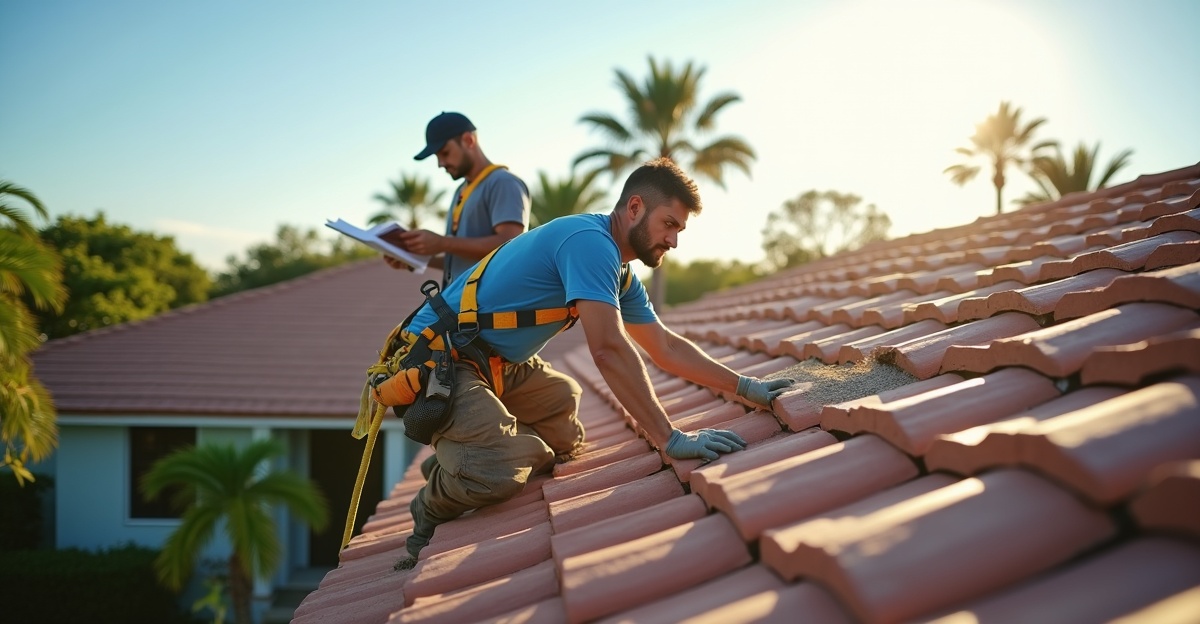
A thorough inspection lays the groundwork for a successful project. A professional concrete roof replacement contractor should examine decking condition, evaluate structural load capacity for heavy concrete tiles, assess ventilation performance, and identify signs of hidden moisture intrusion.
Before installation begins, crews should protect landscaping, windows, and surrounding property. Material deliveries and staging areas must be organized to maintain safety and efficiency.
During installation, the old roofing system is removed carefully. Damaged decking is replaced where necessary. High-performance underlayment is installed according to manufacturer specifications. Concrete tiles are fastened to meet Florida wind uplift standards, which are critical in hurricane-prone regions. Those unfamiliar with replacement steps can explore a detailed overview of the roof replacement process to better understand each phase.
After installation, a final walkthrough confirms quality. Clean-up should leave the property free of debris and stray fasteners. Warranty documentation should be delivered in writing, along with maintenance guidance.
Clear communication throughout the project sets reliable contractors apart. Regular updates reduce stress and prevent misunderstandings.
Warning Signs to Watch For and Questions to Ask Before Signing
Roof replacement is a major investment. Responsible contractors encourage careful review rather than rushed decisions.
Be cautious of high-pressure sales language or large upfront cash requests. Avoid signing contracts without written scope details. Unclear warranty terms should always be clarified before proceeding.
Strong questions lead to strong partnerships. Before signing, we should ask:
- Who will supervise the project on-site each day?
- How will unexpected structural issues be handled?
- What is the communication plan during installation?
- Can proof of insurance and recent local references be provided?
Transparent answers build trust. Clear documentation protects everyone involved.
Concrete roofing systems offer durability, energy efficiency, and storm resistance when installed properly. The key is choosing a contractor who values long-term performance over short-term shortcuts. For homeowners and property managers ready to take the next step, reviewing our roofing services or scheduling a consultation through our contact page makes it easy to compare options with confidence and move forward with clarity.