Roof Repair vs Replacement: Which One Do You Need?
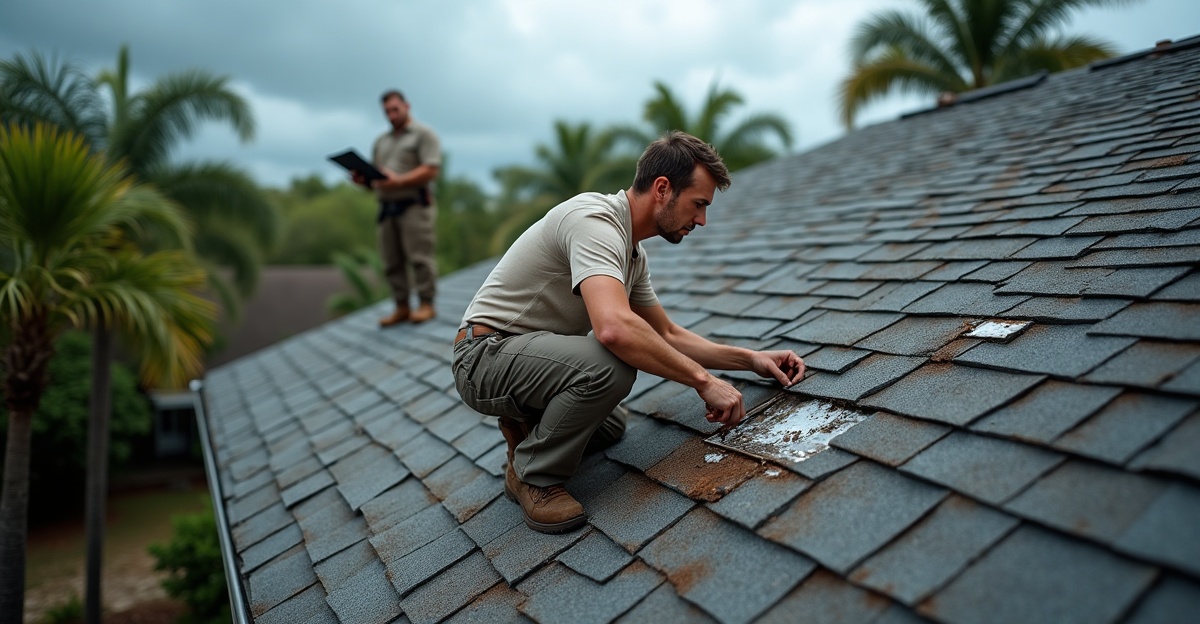
Roof repair or replacement depends on whether damage remains isolated and whether the roofing system, including flashing, underlayment, and decking, remains sound. Across Central and Northeast Florida, storms, wind-driven rain, heat, humidity, and repeat leaks can expand a minor issue into a larger system problem. We recommend a professional inspection before choosing either option.
Key Takeaways
- We may recommend repair for one clear leak or limited damage when the roof still has useful service life.
- Replacement often delivers stronger long-term value when materials show widespread wear, leaks return, or damage spans multiple roof sections.
- Roof age helps inform the decision, but overall condition, concealed moisture, decking condition, and repair history carry greater weight.
- Wind uplift, failed flashing, and moisture below the roof surface may require more than a visible surface repair.
- A complete assessment should document damage, clarify repair limitations, and compare projected costs, service life, and disruption for both options.
The Short Answer: When to Repair a Roof and When to Replace It
A roof repair makes sense when damage is isolated and the roof still has meaningful service life left. Roof replacement is often the better value when damage is widespread, recurring, structural, or tied to a roof system that is nearing the end of its usable life.
In any roof repair vs. replacement decision, age offers a helpful starting point but never tells the whole story. A newer roof may need replacement after severe wind damage or structural failure. An older roof may still qualify for a targeted repair if the problem is limited and the surrounding materials, underlayment, and decking remain sound.
We can’t reliably recommend whether to repair or replace a roof from its age, photos, or one visible symptom alone. We need to inspect flashing, the protective material that directs water away from openings and roof joints, along with decking, underlayment, hidden moisture, repair history, and the source of the damage.
| Factor | Repair May Make Sense | Replacement May Make Sense | Why It Matters |
|---|---|---|---|
| Damage extent | Damage affects one small, defined area. | Damage appears across several roof sections. | Localized issues can often be corrected without replacing the full system. |
| Roof age and condition | Materials remain in good condition with useful life remaining. | Materials are worn, brittle, or near the end of practical service life. | Condition matters more than age alone. |
| Number of leaks | One leak has a clear, repairable cause. | Leaks recur or appear in multiple locations. | Multiple leaks can point to broader system failure. |
| Deck condition | Decking is dry, secure, and structurally sound. | Decking has rot, moisture damage, or structural weakness. | Decking supports the entire roofing system. |
| Storm damage | Wind or impact damage is limited. | Wind uplift or damage affects wide areas. | Wind can weaken material attachment beyond one visible spot. |
| Repair history | Few prior repairs and no recurring concerns. | Frequent repairs have become costly or disruptive. | Repeated patching may only delay a larger project. |
| Expected service life | Repair can reasonably preserve years of reliable performance. | Repair would provide limited short-term benefit. | We focus on practical long-term value. |
| Budget | A focused repair protects a sound roof at a lower immediate cost. | Replacement reduces likely future repair expenses. | Upfront cost matters, but so do future needs. |
| Property disruption | Work can stay contained to one area. | Ongoing repairs would repeatedly interrupt the property. | A single replacement project may be less disruptive over time. |
Central and Northeast Florida roofs face severe thunderstorms, tropical systems, hurricane-force winds, wind-driven rain, intense UV exposure, heat, humidity, algae, moisture, and coastal salt air. Those conditions can speed up wear and allow a small opening to become a fast-moving water intrusion issue. A professional inspection gives us the facts needed to decide whether repair or replacement is the practical path.
When Roof Repair May Be the Right Choice
Targeted roof repair services can be a cost-effective choice when the roof has sound decking, stable surrounding materials, and useful life remaining. Repair addresses a defined problem without replacing a system that still performs well overall.
Common repairable concerns include isolated missing, cracked, lifted, or damaged shingles and tiles. Minor flashing issues around chimneys, vents, skylights, valleys, and roof transitions may also be repairable. One localized leak with an identifiable cause often calls for repair, especially if moisture hasn’t spread beneath the roof surface.
Limited storm damage may qualify for focused work as well. We can assess whether damaged materials remain confined to a specific area or whether wind has affected attachment across the roof. For post-weather concerns, professional storm damage repair helps identify the full scope before small issues grow.
Repair can mean many different services, including:
- Replacing shingles or tiles
- Repairing flashing
- Resolving a leak source
- Correcting ventilation concerns
- Patching a commercial membrane
- Sealing seams or applying an appropriate coating
- Addressing drainage problems
On metal roofs, localized fastener, sealant, or panel problems may be repaired if adjacent material remains in good shape.
Ventilation deserves close attention. Trapped attic heat and moisture can contribute to roofing and interior problems over time. Proper roof ventilation supports a healthier roof system, though it won’t correct active leaks, damaged decking, failing flashing, or widespread material breakdown.
Maintenance can extend service life, but maintenance alone can’t resolve active leaks or hidden moisture. Material compatibility matters, too. Older shingles, tiles, metal panels, and commercial membranes may be discontinued or difficult to match in color, profile, or performance. We explain those limits clearly before recommending a repair.
For a closer look at repairable conditions, see when a roof can be repaired rather than replaced.
When Roof Replacement May Be the Better Investment
Roof replacement may provide better long-term value when repairs would address symptoms without correcting the roof system’s underlying condition. We don’t recommend replacement simply because a roof is aging. We recommend it when the evidence shows the system can no longer protect the property reliably.
Widespread material deterioration is a key sign. On asphalt shingle roofs, this may include extensive granule loss, curling, cracking, brittleness, or missing materials across several slopes. Tile and metal roofs can also develop broad deterioration that makes isolated repairs less practical.
Repeated leaks are another major concern. A leak that returns after repair, leaks in multiple areas, or hidden moisture beneath roof materials may indicate a larger failure. Compromised decking, the structural roof layer beneath the roofing materials, also changes the conversation. Major sagging or suspected structural concerns require prompt professional evaluation.
Storm exposure can cause wind uplift, which means wind has lifted or weakened roofing materials and their attachment. Wind-driven rain can enter small openings that might otherwise seem minor. Florida heat, UV exposure, humidity, and coastal salt exposure may further accelerate deterioration over time.
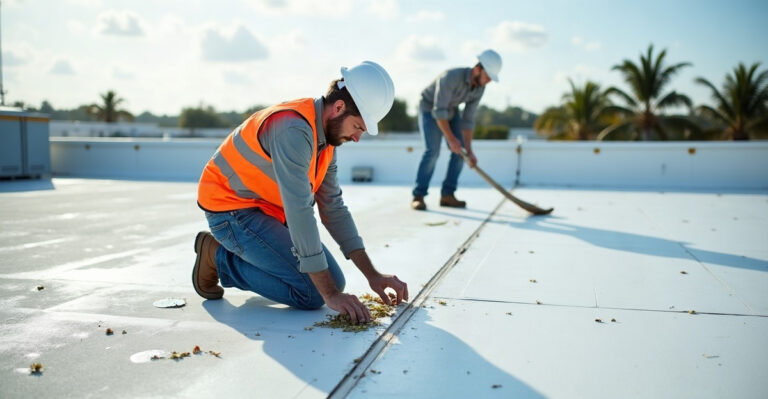
Commercial roofs require a separate approach. Failing membranes, recurring leaks around equipment curbs and penetrations, chronic ponding water, widespread seam failure, and drainage problems can point to replacement. Ponding water is water that remains on a roof for an extended period instead of draining as intended.
A roof with a long repair history may also be ready for replacement. If repairs have become frequent, expensive, difficult to match, or disruptive, a new system can offer a clearer maintenance path. Our roof replacement services focus on the condition of the whole system, including components below the visible surface.
For aging roofs, our guide on repairing or replacing an old roof can help frame the decision. We also recommend reviewing common Florida roof replacement signs before choosing a long-term solution.
The Factors a Professional Roof Assessment Should Evaluate
A qualified local roofer should inspect the roof as a complete system before recommending repair or replacement. We assess the material type, installation condition, location and cause of damage, leak patterns, and history of prior repairs.
Careful assessment includes flashing, valleys, vents, skylights, chimneys, transitions, and roof penetrations. We also look for underlayment and decking concerns, visible ceiling stains, attic moisture where accessible, storm damage indicators, and ventilation issues. Material compatibility matters when a repair needs to integrate with an existing roof.
Residential and commercial roofs have different priorities. Residential evaluations often focus on shingles, tile, metal, flashing, attic ventilation, curb appeal, active leaks, storm damage, and household budgeting. Commercial evaluations focus on membrane condition, seams, drainage, equipment curbs, building operations, and long-term capital planning.
TPO and modified bitumen are common commercial roofing membrane systems. A membrane is the waterproof surface used on many low-slope roofs. These systems need close review of seams, penetrations, drainage, and moisture intrusion. They should never be evaluated like a residential shingle roof.
A transparent assessment explains both options when both are viable. We should be able to show documented findings, describe the expected limits of a repair, explain the practical risks of delaying replacement, and provide a written scope of work. For an overview of available materials, explore our roofing types.
Roof Repair vs. Roof Replacement Cost: What Changes the Price?
Roof repair vs. replacement cost depends on the specific property and scope of work. We avoid one-size-fits-all price claims because roofing needs vary widely across Central and Northeast Florida.
Pricing may change based on roof size, pitch, material, access, number of stories, damage extent, labor needs, decking repairs, permit requirements, disposal, code-related upgrades, storm-related demand, and commercial operational needs. A repair involving a few shingles differs greatly from flashing repair, underlayment replacement, leak tracing, membrane patching, seam repair, or drainage correction.
The right choice comes down to value rather than the lowest immediate price. A lower-cost repair may be ideal for isolated damage on a roof with meaningful life remaining. Repeated repairs on a failing system can cost more over time and create continued disruption. Replacement isn’t automatic for every aging roof, but it can be the sounder investment when repairs would have limited benefit.
We also consider likely future repair needs, expected service life after repair, the risk of interior water damage, and disruption during work. Commercial properties need additional planning for tenant access, equipment protection, scheduling, and business continuity.
Costs, warranties, code requirements, insurance documentation, and remaining roof life depend on the property, installation quality, maintenance history, material, exposure, and inspection findings. Our guide to Florida roof repair costs offers added context for planning.
What to Do Next: Active Leaks, Contractor Questions, and a Professional Assessment
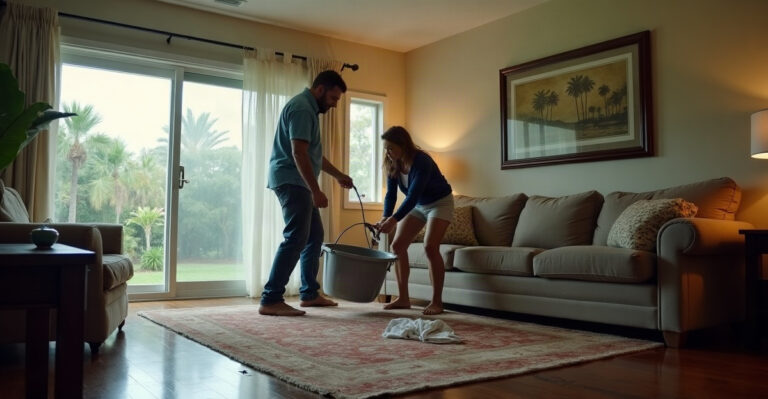
For an active leak or a post-storm concern, protect people and belongings first. Move valuables away from the affected area, contain dripping water if it’s safe, and document visible concerns from inside the property and from the ground. Photos of ceiling stains, active leaks, debris, and missing materials visible from the ground can support the assessment.
We shouldn’t climb onto the roof, tarp large areas without proper training, or attempt risky storm repairs. Roof surfaces can be unstable, especially after wind or rain. Arrange a professional evaluation instead.
Questions and Answers for a Clearer Decision
Ask a contractor whether the damage is isolated or widespread, what caused the leak or deterioration, and whether the decking is dry and structurally sound. We should also ask how much useful life a repair may preserve, what risks come with repair versus replacement, what work is included, and what conditions could change the scope. Photos, written findings, permit considerations, code requirements, and warranty terms should be available where relevant.
- Can a roof be repaired instead of replaced?
- Yes, if damage is isolated and the remaining roof system is sound. An inspection confirms the cause and scope.
- Is it better to repair or replace an old roof?
- It depends on overall condition, repair history, leaks, decking health, storm exposure, and the useful life a repair can reasonably preserve.
- How do we know if roof damage is repairable?
- Damage may be repairable when it stays within a specific area and surrounding materials, flashing, and decking remain in good condition.
- When does a roof leak point to replacement?
- Repeated leaks, multiple leak locations, hidden moisture, compromised decking, and widespread material failure may support replacement.
- Can storm-damaged shingles be repaired?
- Limited damage may be repairable. Widespread wind damage or weakened materials may require a broader solution.
- How many times can a roof be repaired?
- There is no universal number. The answer depends on repair history, material compatibility, roof condition, and remaining service life.
- Does a commercial flat roof need repair or replacement?
- A professional should assess membrane condition, seams, penetrations, drainage, ponding water, and moisture intrusion before making that call.
Central and Northeast Florida homeowners, property managers, and business owners can request a roof assessment from Pyramid Roofing FLA. We’ll review documented findings and help determine whether a targeted repair or replacement is the more practical option for the property.