Is It Cheaper To Coat A Commercial Roof Or Replace It?
When comparing roof coating vs commercial replacement, we often see Florida property owners weigh cost first. Coating typically runs $2–$5 per square foot. Full replacement usually falls between $7–$15+ per square foot. That means restoration can cost 40–70% less upfront when the existing structure remains sound. We base the right choice on roof condition, moisture levels, Florida Building Code compliance, expected lifespan, and how much disruption our tenants and daily operations can realistically handle.
Key Takeaways
- Commercial roof coating usually costs less upfront than replacement, and we recommend it only when the deck and insulation remain dry and structurally sound.
- Full replacement becomes necessary when we find saturated insulation, structural damage, excessive roof layers, or systems that fail to meet Florida wind and hurricane codes.
- Coatings last 10–20 years and limit business disruption, while replacements reset the roof lifecycle with 15–30+ year warranties but require tear-off, create noise, and extend timelines.
- Reflective coating systems reduce UV damage and heat gain in Florida’s climate, and we always correct ponding water and hidden moisture before applying them.
- A professional inspection with a moisture evaluation gives us the clearest path forward and helps us decide whether restoration or replacement delivers stronger long-term value.
Quick Cost Comparison: Roof Coating vs Commercial Replacement in Florida
Commercial property owners across Florida often weigh roof coating vs commercial replacement based on one primary factor: cost. The numbers tell a clear story, but the right choice depends on condition, code compliance, and long-term plans.
Commercial roof coating cost typically runs between $2–$5 per square foot. Pricing depends on roof size, material type (TPO, EPDM, metal, modified bitumen), overall condition, required repairs, and accessibility. A full commercial roof replacement generally ranges from $7–$15+ per square foot. That higher investment reflects tear-off labor, debris disposal, new materials, insulation upgrades, and Florida wind uplift requirements.
In many cases, coating is 40–70% less upfront than replacement when the existing roof is structurally sound. That’s a significant capital expense difference for retail centers, warehouses, office buildings, and multi-tenant properties.
Replacement costs climb because crews must remove the existing system down to the deck. If deteriorated decking or saturated insulation is found, repairs add to the total. Disposal fees also rise quickly on larger projects.
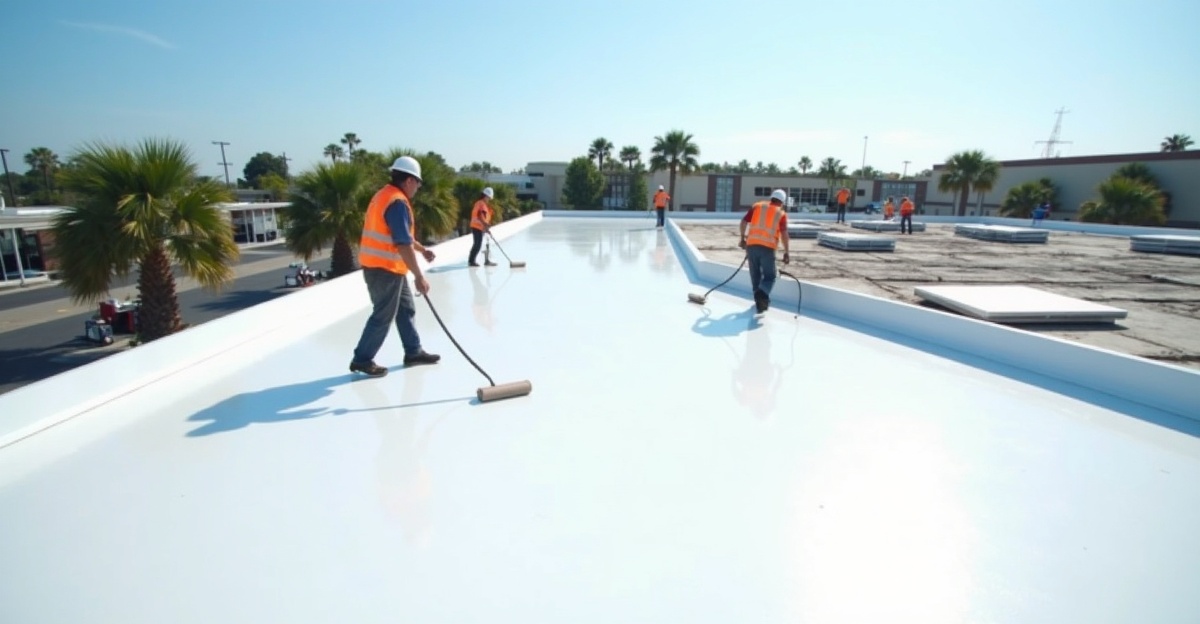
Business disruption is another factor. Coating systems are minimally invasive. Crews clean, prep, make spot repairs, and apply a fluid membrane. Replacement is louder and takes longer. Tenants may notice noise, odors, and restricted access points while crews complete the tear-off and install a new system.
For a detailed breakdown of regional pricing, review our guide on commercial roof coating cost in Florida.
What a Commercial Roof Coating Really Does (And When It Works)
A commercial roof coating is a fluid-applied membrane—usually silicone, acrylic, or polyurethane—installed over an existing roof. Once cured, it forms a seamless, waterproof barrier that restores protection and extends service life.
When properly specified and applied, coatings typically carry 10–20 year warranties, depending on system thickness and manufacturer criteria. They are not quick patches. They are restoration solutions for roofs that still have structural integrity.
Ideal candidates include roofs with:
- Minor leaks or seam separation
- Surface wear or UV degradation
- Aging membranes without widespread failure
Florida’s climate makes reflective white coatings especially valuable. Constant sun exposure accelerates membrane breakdown. A reflective coating reduces heat absorption, which can lower cooling demand in high-heat, high-UV conditions. Fewer tear-offs also mean less material heading to landfills and a faster installation timeline for occupied buildings.
Coating makes sense when the following conditions are met:
- The roof deck and insulation are dry with no saturated areas
- Fewer than two existing roof layers are present
- No widespread structural damage exists
- The building meets current Florida Building Code standards
Some owners worry that coatings are temporary. That misconception often comes from poorly applied systems or roofs that should have been replaced. When the substrate is dry and stable, and the system thickness meets manufacturer standards, restoration can add a decade or two of dependable performance.
Our commercial roof coating services follow a thorough inspection process to confirm eligibility before any recommendation is made. If a roof does not qualify, that is clearly communicated.
What a Full Commercial Roof Replacement Involves
A full replacement means stripping the existing system down to the structural deck. Crews inspect the substrate, replace damaged decking, remove saturated insulation, and install a new membrane system such as TPO, PVC, EPDM, modified bitumen, or metal.
Manufacturer warranties for new systems generally range from 15–30+ years, depending on material and thickness. Replacement resets the roof’s lifecycle.
Replacement is required when:
- Wet insulation or widespread moisture intrusion exists
- Structural damage or deck deterioration is present
- Multiple roof layers exceed code limits
- The system fails Florida hurricane codes or wind uplift ratings
A new roof also creates an opportunity to upgrade insulation. That can improve energy efficiency and help satisfy insurance carrier requirements. For some properties, especially older buildings, this upgrade alone justifies the investment.
The tradeoff is disruption. Tear-offs generate noise and debris. Installation timelines are longer. Retail spaces, offices, and warehouses must plan around staging areas and safety zones.
When coatings are no longer viable, a professional commercial roof replacement provides a clean slate and long-term stability.
Side-by-Side Comparison: Cost, Lifespan, Disruption, and Long-Term Value
Both options provide value. The difference lies in current roof condition and strategic planning.
- Cost per square foot: Coating runs $2–$5. Replacement runs $7–$15+.
- Lifespan: Coating systems last 10–20 years. Replacement systems last 15–30+ years.
- Tear-off required: No for coating. Yes for replacement.
- Business disruption: Minimal for coating. Moderate to significant for replacement.
- Structural impact: Coating restores the surface. Replacement resets structural components.
- Energy efficiency: Reflective coatings reduce heat gain. New single-ply systems can also improve reflectivity and insulation performance.
- Maintenance cycle: Coatings can be re-coated at the end of warranty. Replacements restart the lifecycle from day one.
Return on investment depends on ownership horizon, tenant stability, operating budgets, and projected energy savings. Tax treatment can also influence timing. Some improvements may qualify under Section 179, though a CPA should confirm eligibility based on specific circumstances.
For a deeper look at ROI considerations, review our breakdown on how commercial roof coatings save money.
How Florida’s Climate and Codes Affect the Decision
Florida roofs endure constant UV exposure, high humidity, heavy rain, and hurricane-force winds. These factors accelerate aging and increase the risk of trapped moisture.
Reflective coatings help combat heat absorption and UV breakdown. However, ponding water common on flat commercial roofs must be evaluated carefully. Chronic ponding may require drainage corrections before a coating is approved.
Heavy rain and humidity increase the likelihood of saturated insulation. A roof may look solid from above while moisture hides beneath the membrane. That is why professional inspections matter. Moisture scans and core samples confirm whether the insulation is dry enough for restoration.
Hurricane exposure adds another layer. Florida Building Code requires specific wind uplift ratings and secure edge details. Insurance carriers often request documentation of roof age and condition. If the existing system does not meet current standards, replacement may be mandatory.
Storm damage can also change the equation overnight. Severe events may compromise seams, flashing, or decking. In those cases, immediate storm damage repair and inspection determine whether restoration is still viable.
A Practical Decision Framework for Property Owners
The choice between commercial roof coatings and replacement depends on structural condition, budget strategy, and long-term building plans. Property owners benefit from reviewing both options transparently before moving forward.
Choose coating when:
- The roof is structurally sound and mostly dry
- Capital expenses need short-term control
- Tenant disruption must be minimized
- Extending service life 10–20 years aligns with ownership plans
Choose replacement when:
- Insulation is saturated or structural damage exists
- The roof exceeds allowable layers under code
- Major storm damage compromises integrity
- A 20–30+ year reset with updated insulation is the goal
Is coating just a temporary fix?
No. When properly installed on a qualifying roof, coatings function as long-term restoration systems with manufacturer-backed warranties.
How long will a commercial roof coating last in Florida?
Most systems perform 10–20 years, depending on thickness, maintenance, and exposure. Regular inspections help maximize lifespan.
Can coatings be installed over any commercial roof?
Many systems—including TPO, EPDM, modified bitumen, and certain metal roofs—can be restored. Some substrates require primers or specific repairs first.
How is qualification determined?
A professional inspection with moisture evaluation is the most reliable method. Membrane condition, insulation dryness, structural integrity, and code compliance must all be reviewed before recommending a path forward.
Owners comparing roof coatings vs full replacement for businesses benefit from objective guidance informed by field experience.
Every property is different. The smartest next step is a clear, documented roof assessment. Property managers and building owners can schedule an evaluation with Pyramid Roofing FLA to gain the data needed for a confident, financially sound decision without pressure or guesswork.