Why Businesses Need a 24/7 Commercial Roofing Service
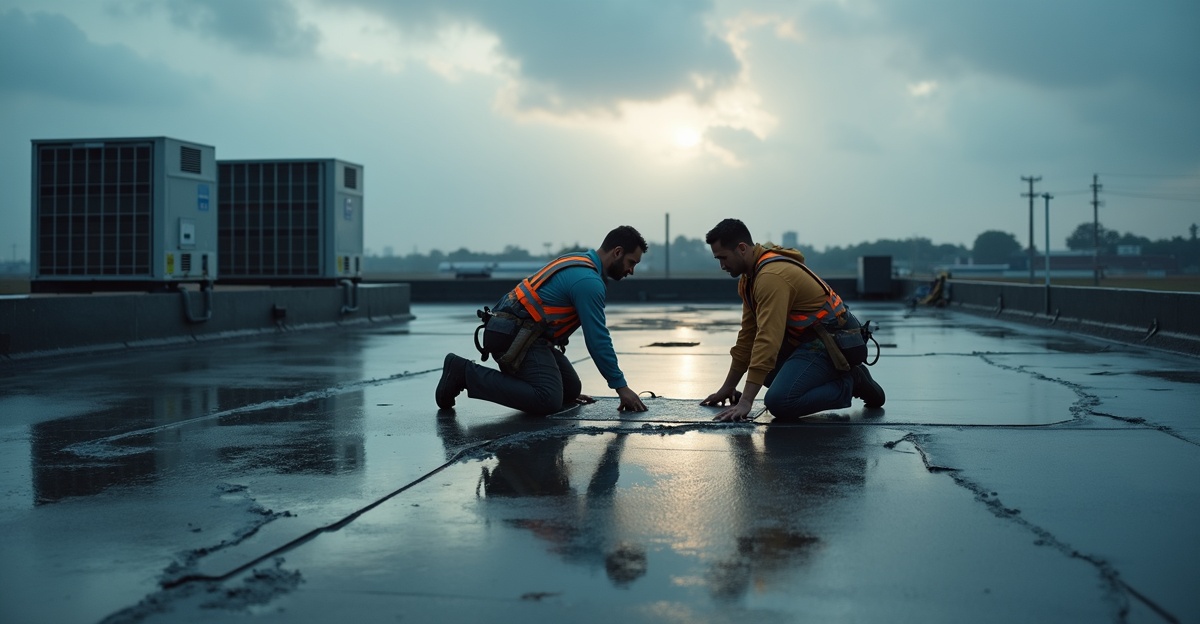
A reliable 24/7 commercial roofing service helps us control roof failures before water intrusion damages inventory, halts operations, or creates safety hazards. We respond to storm damage, membrane punctures, drainage failures, and flashing separation with urgency and precision. Immediate action protects assets, reduces liability, and keeps facilities operating safely.
Key Takeaways
- Commercial roof failures can shut down operations within hours due to water spread, safety risks, and equipment damage.
- Delayed repairs often drive up costs through saturated insulation, structural deterioration, interior damage, and possible insurance claim reductions.
- True emergencies include active leaks, widespread membrane blow-offs, severe ponding, exposed insulation, and structural sagging.
- A 24/7 response includes rapid dispatch, on-site assessment, temporary waterproofing, thorough documentation, and a clear plan for permanent repair.
- Proactive maintenance partnerships and defined emergency protocols reduce downtime, improve response speed, and protect long-term property value.
Roof Failures Can Shut Down Operations Within Hours
A commercial roof failure can disrupt business operations in a matter of hours. Water intrusion spreads fast, damages inventory, and creates immediate safety concerns for employees and customers.
We’ve seen a single commercial roof leak repair issue halt production lines, force retailers to rope off sales floors, and push tenants out of suites in multi-tenant buildings. A small opening in the membrane can quickly turn into a large operational problem if it’s ignored.
Common emergency scenarios include:
- Storm damage that lifts sections of membrane or metal panels
- Major leaks during business hours that drip onto equipment or inventory
- Membrane punctures on TPO or EPDM systems from foot traffic or dropped tools
- Drainage failures that cause ponding water on flat roofs
- Flashing separation along parapet walls
- HVAC curb leaks around rooftop units
- Damage to modified bitumen or metal roof panels after high winds
Each of these can trigger the need for a 24/7 commercial roofing service.
Not every issue is catastrophic. However, unaddressed water intrusion escalates quickly. Moisture can move laterally across insulation, saturate large areas, and weaken the deck below. Within 24 to 48 hours, mold can begin forming in damp materials. Ceiling tiles can collapse. Electrical systems may be exposed to moisture, increasing fire and shock risks. Slip-and-fall hazards become real liabilities.
An emergency roofing service isn’t about overreacting. It’s about controlling a situation before it spreads and becomes more expensive or dangerous.
The Financial and Liability Risks of Delayed Roof Repair
Delaying emergency commercial roof repair often multiplies the cost of damage. What begins as a small membrane tear can lead to saturated insulation, deck deterioration, and corrosion in structural components.
Once insulation is wet, it rarely dries in place. That means removal and replacement. If water reaches the deck, repairs may expand into structural work. Interior damage adds another layer of expense: equipment replacement, inventory loss, ceiling repairs, and potential mold remediation.
Operational downtime can be even more expensive. Industrial facilities may face SLA penalties. Retail stores can lose revenue during closures. Healthcare facilities and property managers risk reputational damage if tenants or patients are displaced.
Insurance carriers typically require prompt mitigation to prevent further damage. If temporary waterproofing wasn’t installed quickly, claims may be reduced. A documented response from a 24/7 commercial roofing service shows that reasonable steps were taken to limit loss.
Safety and compliance matter as well. Leaks that create unsafe work conditions can raise OSHA concerns. Wet floors, compromised ceilings, and exposed wiring put teams at risk.
We believe in risk mitigation, not fear. The goal is simple: protect the building, safeguard occupants, and preserve the asset’s value. A rapid response plan is part of sound business management, not an optional add-on.
What Qualifies as a Commercial Roofing Emergency
Every leak doesn’t require flashing lights and midnight dispatch. Clear criteria help determine when to call for emergency roofing service versus scheduling a prompt repair during business hours.
True commercial roofing emergencies include:
- Active water intrusion into occupied spaces
- Widespread membrane blow-off after a storm
- Severely clogged or failed drainage systems causing significant ponding
- Structural sagging or visible deck deflection
- Exposed insulation after wind damage
- Flashing detachment during high winds
In these cases, emergency commercial roof repair is necessary to stabilize the building and prevent further harm.
Other issues are urgent but may not require immediate overnight response. Minor punctures, small seam separations, or localized blistering on modified bitumen systems can often be scheduled during normal service hours—unless they are actively leaking.
High-risk facilities benefit most from guaranteed response access. Warehouses storing valuable goods, healthcare facilities, data centers, and multi-tenant commercial properties can’t afford extended downtime. For these buildings, a 24/7 commercial roofing service serves as a form of operational insurance.
When evaluating long-term planning, it also helps to understand the lifespan of commercial roofs in Florida. Aging systems are more prone to seam failure, flashing issues, and storm damage, which increases the likelihood of urgent situations.
How a 24/7 Commercial Roofing Service Minimizes Downtime
Response time means more than answering the phone. It includes call intake, crew dispatch, on-site assessment, temporary waterproofing, documentation, and a clear plan for permanent repair.
Here’s how a typical emergency process works:
- Call intake and prioritization. Critical leaks affecting operations move to the top of the queue.
- On-site assessment. A trained crew inspects the affected area, identifies the source of intrusion, and evaluates overall system conditions.
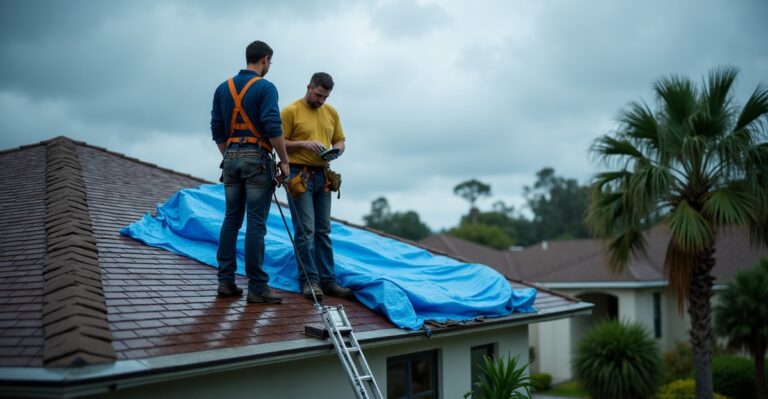
- Temporary stabilization. This may include tarping, sealant application, membrane patches, drain clearing, or securing loose flashing to achieve immediate waterproofing.
- Documentation. Photos, measurements, and damage reports support insurance claims and internal decision-making.
- Permanent repair scheduling. Whether that involves targeted commercial roof repair or more extensive restoration, a clear next step is defined.
A reliable 24/7 commercial roofing service works efficiently in occupied buildings. We coordinate with facility teams, isolate work areas, and limit noise or disruption where possible. Quick containment reduces the spread of moisture and shortens downtime.
Having access to an experienced commercial roofing contractor who understands flat and low-slope systems makes a measurable difference. The faster we stabilize the roof, the fewer secondary damages a business faces.
Proactive Partnerships vs. On-Demand Emergency Calls
Reactive, one-off service calls solve immediate problems. Proactive partnerships prevent many of those problems from happening in the first place.
With a documented maintenance plan, we become familiar with the building’s layout, roof access points, drainage design, and repair history. That familiarity allows faster diagnostics during an emergency and reduces surprises.
Preventative inspections identify vulnerable seams, aging flashings, clogged drains, and early membrane wear. Property managers can review the benefits of roof preventative maintenance to see how routine care reduces long-term costs.
For buildings in hurricane-prone areas, advance planning for storm damage repair improves response speed after severe weather. Storm preparation meetings, access planning, and contact protocols save valuable hours when winds subside.
Proactive agreements make the most sense for:
- Large property portfolios
- Facilities with mission-critical operations
- Aging roofing systems nearing restoration or replacement
- Multi-tenant properties where liability exposure is higher
In some cases, coatings can extend service life and add waterproof protection. Evaluating roof coating systems as part of a long-term plan can reduce emergency frequency and defer full replacement.
The focus stays on business continuity. Planning ahead makes emergency response efficient and predictable.
How to Evaluate the Right Commercial Roofing Contractor for Emergency Needs
Choosing the right partner for emergency response requires careful evaluation. The following checklist helps guide that decision:
- Proper licensing and insurance coverage
- Documented safety procedures and training
- Defined response time commitments
- A true 24/7 contact process with live dispatch
- Experience working in occupied commercial properties
- Capability to perform both temporary stabilization and permanent repairs
- Photo documentation and reporting support for insurance claims
Response speed varies by region and weather conditions. In general, an emergency roofing service should provide clear guidance immediately and dispatch crews as quickly as conditions allow, often within hours for critical leaks.
Commercial roof leak repair is urgent when active water intrusion threatens operations, safety, or critical assets. A small stain without active dripping may allow short-term scheduling. Active water flow requires immediate attention.
Most insurance policies require reasonable steps to prevent additional damage. Emergency mitigation—like tarping or temporary patches—demonstrates compliance with that expectation.
Transparent communication matters. Clear scope descriptions, honest assessment of damage, and straightforward pricing build trust. Reviewing guidance on choosing a commercial roofing contractor can help teams ask the right questions.
When planning ahead, schedule a roof assessment and discuss emergency response protocols before a crisis occurs. Teams can request planning support through our contact page and align emergency procedures with facility operations.
A dependable 24/7 commercial roofing service protects more than a roof. It protects operations, people, and long-term investment in the property.