How Do Commercial Roof Coatings Save Money?
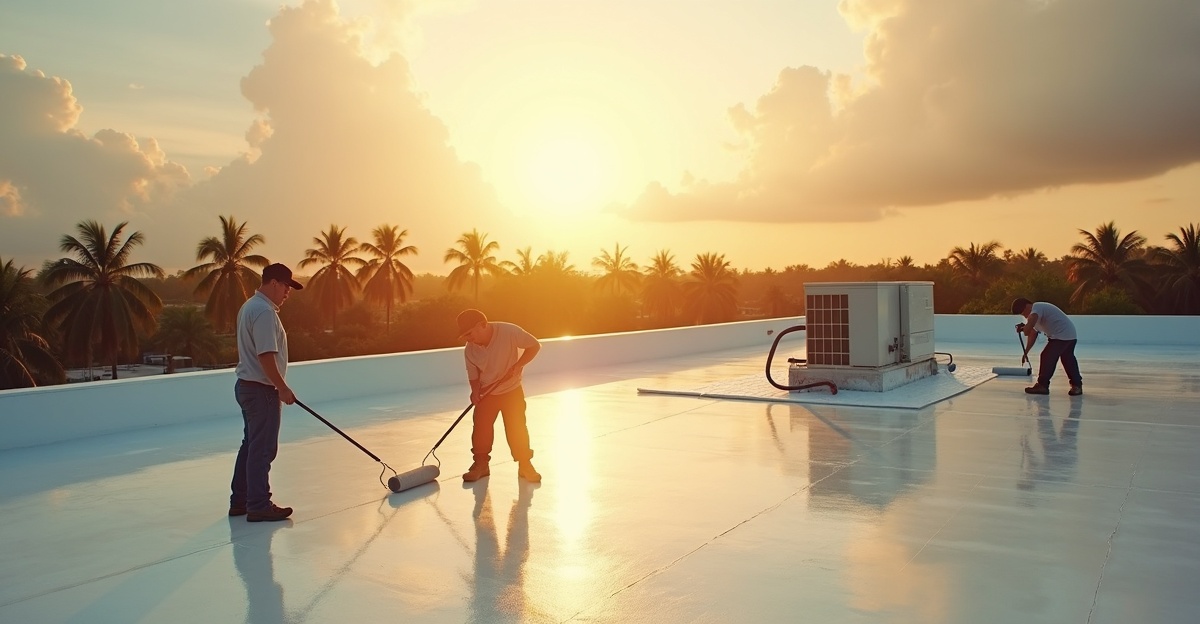
Commercial roof coating savings Florida property owners achieve come from lower cooling costs, longer roof life, and fewer repairs in a climate defined by intense heat, UV exposure, and heavy rain. We use roof coatings to reflect sunlight, seal vulnerable areas, and delay full replacement while protecting structurally sound systems.
Key Takeaways
- Reflective coatings reduce roof surface temperatures, which lowers HVAC runtime and monthly cooling costs during Florida’s extended cooling season.
- Fluid-applied systems can extend a roof’s service life by 10–20 years when the structure remains sound, allowing us to postpone expensive tear-offs and replacements.
- Seamless, elastomeric membranes help stop leaks before they spread, cutting emergency repairs, interior damage, and ongoing maintenance costs.
- Coatings typically cost far less than full replacement and create minimal disruption to daily operations.
- Tax considerations, warranty options, and potential insurance advantages may further improve long-term financial predictability, depending on individual circumstances.
Do not modify or enhance the wording; the text must remain identical except for the HTML markup.
Do not convert the first sentence or introductory text into a heading — it must remain a normal paragraph (<p>).
Where the Biggest Cost Savings Happen First: Energy Efficiency in Florida Heat
Commercial roof coating savings Florida property owners see often start with lower cooling bills. In our climate, that matters. Central and Northeast Florida deal with strong UV exposure, long cooling seasons, steady humidity, and heat that doesn’t let up.
Energy efficient roof coatings work by improving reflectivity and thermal emittance, as explained by the U.S. Department of Energy’s guidance on cool roofs. Reflectivity means the roof reflects sunlight instead of absorbing it. Thermal emittance refers to how quickly the roof releases any heat it does absorb. A coating with strong performance in both areas keeps the roof surface significantly cooler than a traditional dark membrane.
That temperature difference is critical on the flat and low-slope roofs common on commercial buildings here. When the roof surface stays cooler, less heat transfers into the building. Less heat inside means the HVAC system doesn’t run as long or as hard. Lower runtime leads to reduced monthly energy bills.
We’ve seen this play out with a 20,000 sq. ft. commercial building applying a reflective silicone roof coating Florida system. During peak summer months, cooling costs can drop in measurable ways, improving payback over time. Results depend on insulation levels, thermostat settings, occupancy patterns, and existing roof condition. There’s no universal percentage savings, and we’re always clear about that.
Still, for buildings with dark, aging membranes, the return often begins with energy. For a deeper breakdown of the science behind it, we cover the mechanism in detail in can roof coatings reduce cooling costs. The short version is simple: cooler roof, less heat gain, lower strain on equipment.
Florida reflective roofing benefits are strongest where air conditioning runs most of the year, as supported by ENERGY STAR guidance on cool roof performance in warm climates. Over time, that consistent reduction in thermal load can compound into meaningful operational savings.
Extending Roof Life Without Replacement: Delaying Six-Figure Expenses
One of the most powerful financial advantages of coatings is the ability to extend roof life without replacement. Instead of tearing everything off, we restore what’s still structurally sound.
Coatings are a core part of commercial roof restoration Florida strategies. They seal minor cracks, reinforce seams, and protect the existing membrane, also called the substrate. This isn’t a structural rebuild. It’s a protective layer that slows aging and strengthens vulnerable areas.
In Florida, roofs age quickly. Intense UV radiation breaks down membranes. Daily expansion and contraction from heat stress seams and flashing. Heavy rain pounds exposed surfaces. A fluid-applied coating forms a continuous barrier that reduces UV degradation and minimizes the stress caused by temperature swings and moisture.
The financial difference between roof coating cost vs replacement can be significant. A coating system generally costs far less than a full tear-off and replacement, which can reach six figures for large commercial properties. Replacement often includes:
- Tear-off labor and debris disposal
- Interior disruption for tenants or operations
- Possible code upgrades triggered by a full system replacement
By contrast, a coating system typically involves cleaning, minor repairs, and application of a fluid membrane with minimal disruption.
Many professionally installed systems can add 10–20 years of service life when properly maintained, consistent with guidance from the National Roofing Contractors Association on roof coating restoration. Actual lifespan depends on product type, thickness, and existing roof condition. We explain that balance clearly in do roof coatings really extend roof life.
From a budgeting standpoint, the real win is deferring capital expenditure. Instead of absorbing a major replacement cost today, owners can extend performance, protect assets, and plan for long-term upgrades on their own timeline.
Reducing Repairs, Leaks, and Maintenance Call Costs
Commercial roof maintenance cost reduction is another area where coatings make a difference. Once applied, a quality system creates a seamless, waterproof barrier over seams, fasteners, and penetrations.
Florida’s weather increases leak risks. Heavy rains. Wind-driven storms. Hurricanes. High humidity. Each one exposes small vulnerabilities in a roof membrane. Left alone, minor cracks or open seams can turn into recurring service calls.
Elastomeric roof coating savings often come from flexibility. These coatings stretch and contract with temperature changes, helping bridge small cracks before they become leaks. Florida flat roof coating solutions also simplify maintenance by creating a single, uniform surface that’s easier to inspect and repair.
Fewer leaks mean fewer emergency repairs. That also helps avoid:
- Interior water damage to ceilings and drywall
- Wet insulation that loses performance
- Damage to inventory, equipment, or tenant spaces
- Mold and moisture remediation work
There are limits. Coatings aren’t appropriate if insulation is saturated, the structural deck is compromised, or the membrane is severely deteriorated. In those cases, we address underlying issues first through professional roof repair services or recommend a different solution. Restoration works best on roofs that are still fundamentally sound.
Insurance, Warranty, and Potential Tax Advantages
Roof coating tax benefits Florida property owners explore often include potential Section 179 deductions under IRS guidelines. In certain situations, restoration may qualify as a maintenance or improvement expense rather than a full capital replacement. Every business is different, so we always recommend checking with a CPA or tax professional before making assumptions. We don’t give legal or tax advice, but we encourage owners to understand their options.
Insurance can also factor into the equation. Improved waterproofing and an updated roof system may support insurability, depending on the carrier and policy details. In storm-prone areas, documented restoration and proactive maintenance can demonstrate responsible building management. Policies vary, so confirmation with the carrier is essential.
Warranty coverage is another financial consideration. Many silicone roof coating Florida systems include manufacturer-backed warranties. With required inspections and maintenance, these warranties are often renewable. That adds predictability to budgeting.
Transparency matters here. Coverage terms, inspection intervals, and performance standards all depend on the specific product and proper installation. Professional application and documented maintenance are key to protecting those benefits.
Coating Costs vs Replacement: Breaking Down the Numbers Clearly
Understanding roof coating cost vs replacement starts with scope.
A coating project typically includes cleaning, targeted repairs, and application of a fluid-applied system. Disruption is usually limited. Operations often continue during installation.
A replacement involves tear-off of the old system, disposal, potential new insulation, and installation of a new membrane. Downtime is longer. Costs are higher. Larger buildings can quickly reach six-figure totals.
Commercial roof coating savings Florida property owners see are driven by three main factors: deferred replacement, reduced operational disruption, and lower lifecycle costs over time. Our discussion in should commercial roofs use coatings or replacements walks through that comparison in more detail.
System type also matters.
Silicone roof coating Florida systems perform well in areas with ponding water and frequent rainfall. Acrylic coatings are cost-effective, highly reflective, and perform best where drainage is adequate. Elastomeric systems provide flexibility that supports crack-bridging performance and long-term durability.
Each must comply with Florida Building Code roofing requirements and local storm exposure standards. Professional inspection determines viability. Not every roof qualifies, and that’s an important part of an honest assessment. We review age, substrate condition, moisture levels, and structural integrity before recommending any coating solution. A full overview of how these systems function is available in what is a roof coating and how does it work.
When a Commercial Roof Coating Is—and Isn’t—the Right Financial Move
A coating is often a strong financial choice when the roof structure is sound and approaching mid-to-late lifespan. Minor leaks. Seam separation. Rising cooling bills linked to dark, heat-absorbing surfaces. Owners looking for commercial roof restoration Florida instead of immediate roof replacement frequently see value here.
It’s less appropriate where structural deck damage is present, insulation is saturated across wide areas, or membrane deterioration is severe. In those cases, replacement or major reconstruction is typically the responsible path.
We’ve served businesses across Central and Northeast Florida for years. Our team understands local building codes, wind zones, and the demands of this climate. Through our full range of commercial roofing services, we evaluate each property on its own data, not assumptions.
A thoughtful inspection is the right first step. From there, we calculate realistic savings based on roof condition, building size, insulation levels, and energy use. Every property is different. The right decision balances short-term budget, long-term durability, and Florida’s demanding environment.
For specific questions about pricing, timelines, or system options, we encourage scheduling a consultation through our contact page. Together, we can determine whether a coating supports the financial and operational goals of the property.
Frequently Asked Questions
Commercial roof coatings can lower cooling expenses by reducing roof surface temperatures and limiting heat transfer into the building. In Florida’s long cooling season, reflective coatings help decrease HVAC runtime, which may lead to measurable monthly savings. Actual reductions depend on insulation levels, roof color, occupancy patterns, and existing system condition.
Yes, a roof coating is typically far less expensive than a full roof replacement. Restoration avoids tear-off labor, debris disposal, and major operational disruption. While replacement may be necessary for severely damaged systems, coatings offer a cost-effective option when the roof structure remains sound.
A professionally installed commercial roof coating can extend roof life by 10 to 20 years when properly maintained. Lifespan depends on the product type, application thickness, roof condition, and exposure to sun and storms. Routine inspections and maintenance help preserve performance and maximize long-term savings.
Yes, fluid-applied roof coatings create a seamless, waterproof membrane that seals seams, fasteners, and penetrations. Elastomeric systems expand and contract with temperature changes, helping reduce crack formation. While coatings improve water resistance, they are most effective on structurally sound roofs without widespread moisture damage.
Some commercial roof coating projects may qualify for tax advantages, depending on how the restoration is classified. In certain cases, improvements could fall under maintenance or Section 179 deduction guidelines. Eligibility varies by business structure and circumstances, so consulting a qualified tax professional is recommended before making financial decisions.