Storm Damage Roof Replacement: When Is It Necessary?
We recommend storm damage roof replacement when damage affects large roof areas, leaks or moisture intrusion continue, decking shows damage, or the roof can’t protect the property through future Florida storms. A documented professional inspection separates isolated repair needs from hidden wind, hail, flashing, or underlayment damage that requires full replacement.
Key Takeaways
- Address active leaks, exposed decking, tree impacts, sagging, or major material loss promptly. We recommend tarping or temporary repairs to prevent further damage.
- Consider repairs for isolated damage on a newer, otherwise sound roof. Matching materials must be available, and the roof should show no pattern of recurring leaks.
- Choose replacement as the stronger long-term option when damage affects several roof areas. Widespread hail strikes, wet insulation, weakened decking, repeat repairs, or unavailable matching materials also support replacement.
- Document damage safely with dated photos, storm details, emergency repair invoices, and written inspection findings. Avoid climbing onto a wet or damaged roof.
- Select a licensed and insured contractor that provides photo evidence, a clear written scope, warranty details, and a plain-language repair-versus-replacement recommendation.
Does Storm Damage Always Require Roof Replacement?
Storm damage does not automatically require a full roof replacement. Isolated damage can often be repaired, while widespread damage, recurring leaks, compromised materials, or an older roof may make a storm damage roof replacement the sounder long-term choice.
Central and Northeast Florida roofs handle hurricanes, tropical storms, high winds, wind-driven rain, heat, humidity, hail, and coastal exposure in applicable areas. These conditions can cause obvious problems, such as missing shingles, along with hidden roof-system issues that worsen over time.
Concerned about storm damage? Schedule a professional roof inspection before a small issue becomes a larger repair.
We recommend basing the decision on a thorough inspection, clear documentation, current roof condition, and expected long-term performance. Pressure should never drive a major roofing decision. The best storm damage roof replacement option is not necessarily the fastest or most expensive one; it is the solution supported by a thorough inspection, a clear scope, quality materials, and an appropriate warranty.
Florida storms can loosen materials without tearing them away completely. For a closer look at common warning signs, review roof storm damage signs and arrange an evaluation if anything looks out of place.
Signs We Need Emergency Mitigation and What We Can Safely Check
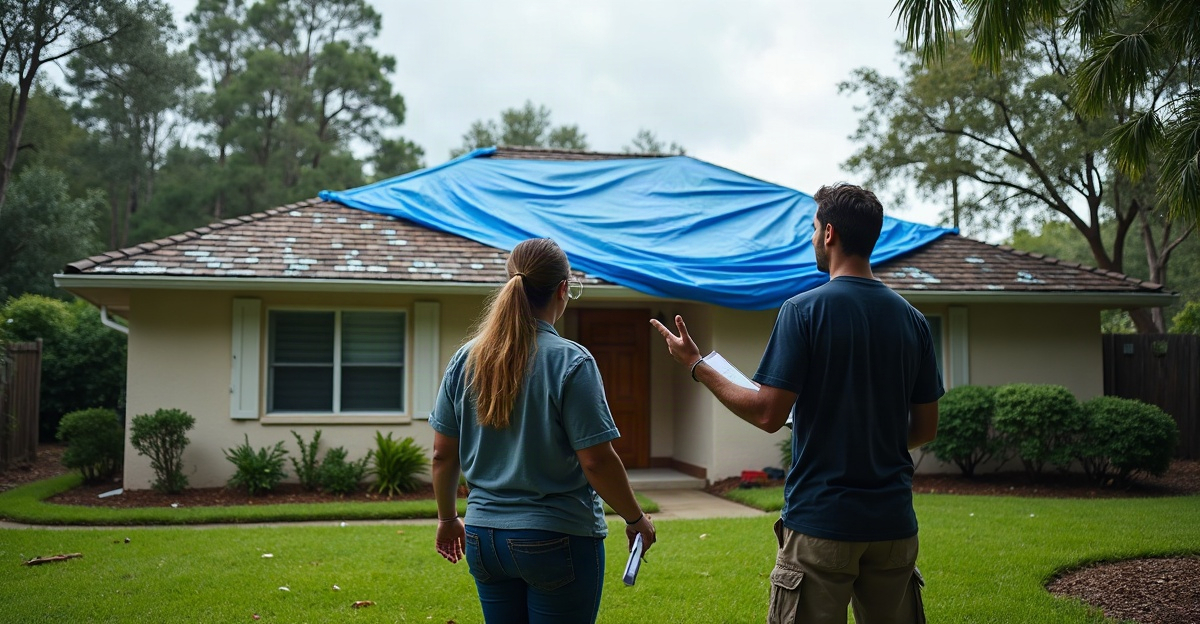
Urgent action makes sense when water is actively entering an occupied space, roof decking is exposed, a tree has struck the roof, visible sagging appears, or large sections of roofing material are missing. These conditions do not always mean replacement is required, but they should be stabilized quickly to limit further damage.
Emergency tarping, leak containment, and temporary repairs can help protect the property while we determine the permanent solution. Our storm damage repair services can address immediate concerns, but temporary protection does not replace a complete assessment.
Safe Ground-Level Checklist
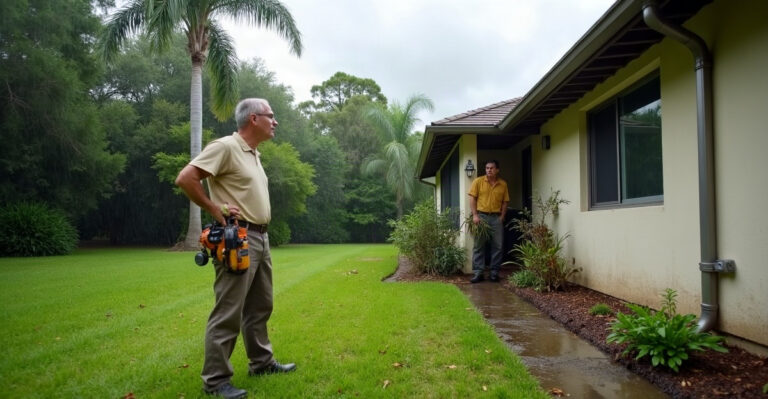
After conditions are safe, we can document visible concerns without climbing onto the roof:
- Look for shingles or roofing debris around the property.
- Check gutters, downspouts, siding, and soffits for storm-related damage.
- Look for water stains on ceilings or walls inside.
- Photograph visible conditions and note the storm date.
- Avoid wet, steep, debris-covered, or visibly damaged roofs.
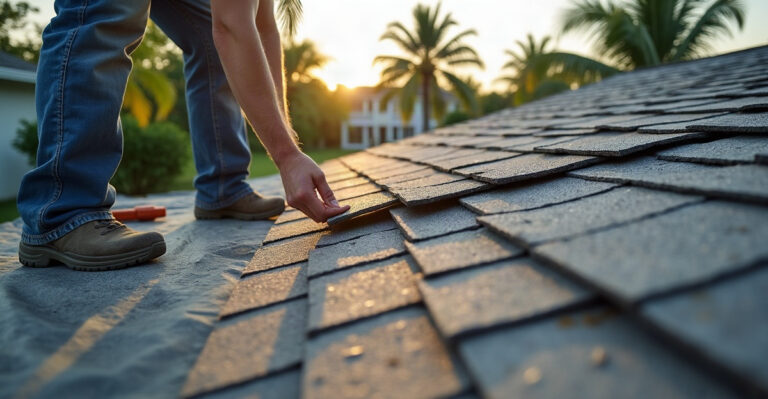
Wind and hail damage is not always visible from the ground. A trained inspection can identify lifted shingles, damaged flashing, punctures, granule loss, wet insulation, and underlayment damage.
Flashing is the protective metal or material installed around roof joints and openings. Decking is the structural layer beneath the roof covering. Underlayment is the water-resistant layer below shingles or other roofing materials. Moisture intrusion means unwanted water has entered the roof system.
For practical steps after severe weather, see what to do after roof storm damage.
Repair vs. Replacement: The Factors That Matter Most
One missing shingle or a single ceiling stain does not tell the whole story. We evaluate the extent, location, and severity of damage, then consider the roof’s age, repair history, material availability, and ability to perform through future Florida weather.
Repair may be reasonable when damage stays within a limited area, the roof remains relatively new and otherwise sound, and matching materials are available. Repairs also work well when flashing, vents, pipe boots, skylights, or other penetrations can be corrected without disrupting the broader roof system. A repair is strongest when there are no recurring leaks, widespread material damage, or signs of moisture intrusion.
Storm damage roof replacement may be the more responsible option when missing, cracked, creased, lifted, or torn shingles affect multiple slopes or components. Replacement may also make sense after widespread hail impact, punctures, bruising, or granule loss; exposed or weakened decking; wet insulation; active leaks; or repeated repair needs. If materials cannot be matched, a patch may leave the roof with uneven protection and appearance.
A replacement also gives us the chance to improve ventilation, drainage, storm resistance, and future maintenance planning. We will explain the practical differences between roof repair versus replacement so the recommendation stays clear.
Permit, code, and insurance requirements vary by property, jurisdiction, roof system, and scope of work. We recommend confirming applicable requirements with a qualified local contractor or permitting authority before work begins. For a roof that remains repairable, our professional roof repair work can restore localized damage. When conditions support a new system, explore our roof replacement options.
What Happens During a Storm Damage Roof Replacement Inspection?
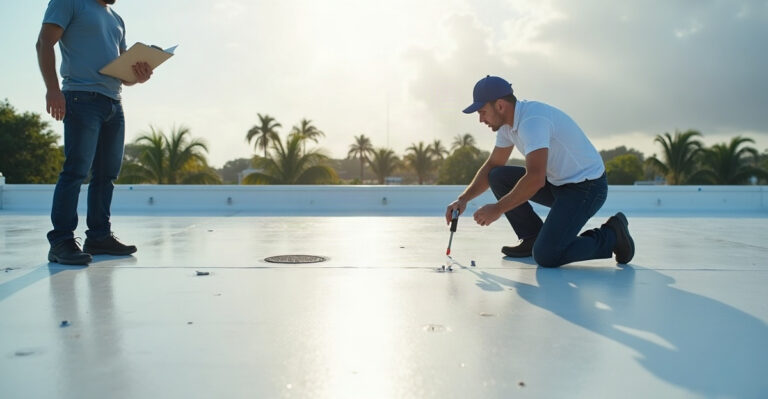
A storm damage roof replacement inspection is a documented evaluation, not an automatic recommendation to replace the roof. We inspect the full system to identify the appropriate solution and separate immediate mitigation from permanent restoration.
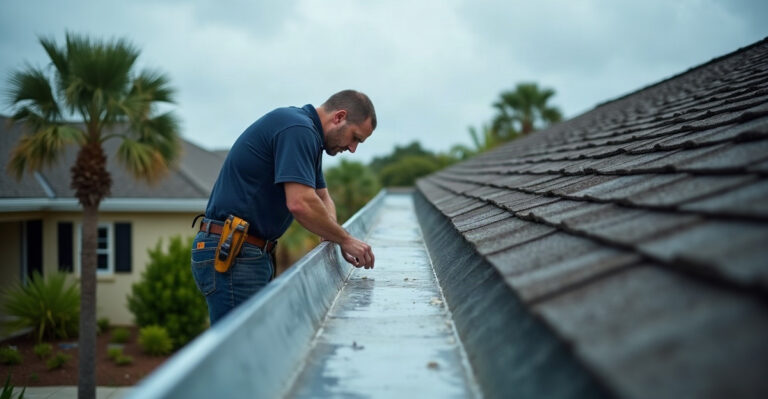
During the inspection, we assess visible roofing materials, edges, valleys, and penetrations. We look for missing, lifted, creased, cracked, torn, or damaged shingles and components. Where conditions allow, we also check for hidden wind, hail, flashing, underlayment, decking, and moisture-related concerns.
An interior or attic review may be appropriate to identify water stains, wet insulation, or evidence of moisture intrusion. We document findings with photos and a written explanation, then discuss repair options, replacement considerations, available materials, the expected scope, and recommended next steps.
Replacement costs vary based on roof size, slope, material, damage scope, permit needs, and possible code upgrades. A complete inspection helps establish a meaningful estimate without guessing. Request a documented storm-damage assessment for your home or commercial property.
For hurricane-specific evaluation guidance, see post-hurricane roof inspection checks. We also offer systems suited to different building needs, including shingle roof options, metal roofing systems, and flat roof systems.
Document Damage, Protect Property, and Plan for Commercial Needs
Good documentation helps establish a clear record of the condition after a storm. When safe, we should take dated photos and videos before cleanup, retain invoices for emergency mitigation and repairs, and save written contractor findings, photos, repair records, and scopes of work.
We should review the policy and contact the insurer promptly if damage may be covered. Coverage depends on policy language, deductibles, cause of loss, depreciation terms, and the insurer’s assessment. No contractor can guarantee claim approval, payment amount, or coverage for every type of storm damage. For added context, review storm damage insurance coverage.
We should not wait for an insurance decision before taking reasonable emergency mitigation steps to limit additional property damage. A tarp, containment effort, or temporary repair may protect ceilings, finishes, and belongings while the assessment continues.
Commercial properties need a coordinated response. We prioritize protecting inventory, equipment, tenants, employees, and customers while limiting operational disruption and water damage. Flat and low-slope roofs also require attention to drainage and ponding-water risk. Clear records help owners, landlords, tenants, property managers, and insurers stay aligned, while work scheduling can often account for operating hours.
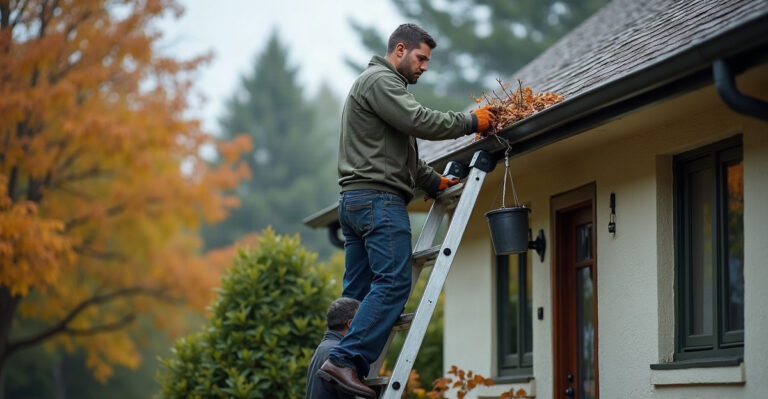
After repairs or replacement, ongoing maintenance supports better long-term performance. Gutter condition matters too, especially after heavy rain and wind. Our gutter services can help direct water away from the building and roof edge.
How to Choose a Storm Damage Roof Replacement Contractor
We should compare any storm damage roof replacement contractor based on proof, process, and communication rather than unsupported claims. A reliable contractor explains the findings in plain language and makes the repair-versus-replacement recommendation easy to understand.
Before signing a contract, we should ask whether the contractor is properly licensed and insured for the work; whether a written scope and photo documentation will be provided; and why repair or replacement is recommended. We should also confirm the materials, workmanship warranty, manufacturer warranty, permit process, site protection, cleanup plan, communication process, and availability of recent local project examples or references.
Pyramid Roofing FLA focuses on transparent evaluations and clear written scopes so property owners can make informed decisions. Storm damage roof replacement services should account for both immediate protection and the roof’s future performance, whether the property is residential or commercial.
Before publication, a qualified roofing professional should review statements involving roof-system failure, code compliance, insurance documentation, materials, and repairability. The published page should also include author and reviewer information, relevant credentials, service-area details, a last-reviewed date, and available licensing, insurance, certification, project gallery, and warranty information.
Contact Pyramid Roofing FLA for a transparent inspection, repair recommendation, or replacement estimate. Our goal is to identify the appropriate solution, not automatically recommend replacement.