How Do I Spot Hidden Roof Leaks?
Hidden roof leak detection Florida homeowners rely on starts with spotting subtle interior and exterior warning signs, such as ceiling water stains, musty odors, and storm-damaged shingles that don’t always drip on cue. Water often travels along decking and framing before it appears indoors, so we look beyond the obvious. We understand how Florida’s wind-driven rain, high humidity, and salt air create moisture damage that hides in plain sight and spreads quietly.
Key Takeaways
- Ceiling stains, bubbling paint, warped drywall, and persistent musty odors often signal concealed moisture, even when we don’t see an active drip.
- Water can travel far from its entry point, so interior damage rarely lines up perfectly with the roof area above.
- From the ground, we check for missing or curled shingles, damaged flashing, excess granules in gutters, sagging rooflines, and ponding water on flat roofs.
- Florida’s heavy storms, high humidity, and salt air increase the risk of wind-driven rain intrusion, corrosion, and gradual structural damage.
- Recurring leaks, soft decking, mold growth, or repeated storm-related problems signal that we need a professional roof inspection to trace and fix the true source.
Early Warning Signs Inside Your Home or Building
Hidden roof leaks rarely announce themselves with steady drips. Instead, they begin with subtle roof water damage symptoms that are easy to dismiss.
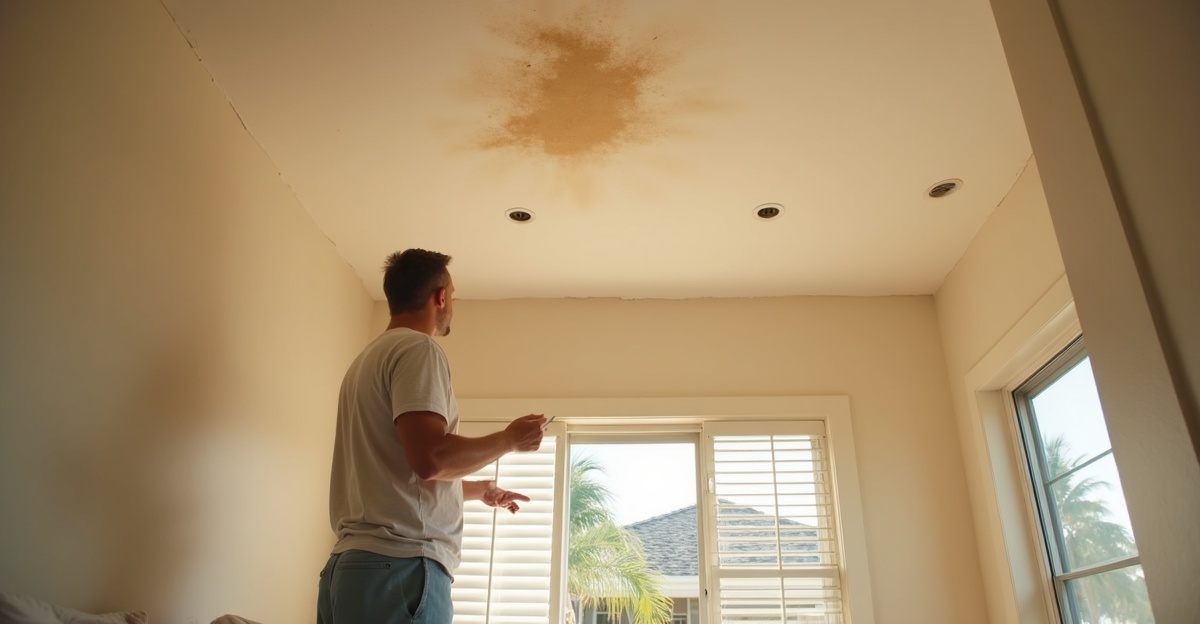
One of the most common roof leak signs Florida homeowners notice is ceiling water stains but no visible leak. These stains often appear as yellow, brown, or copper-colored rings. The tricky part? The stain may sit several feet away from the true entry point. Water can travel along roof decking, framing, or insulation before gravity finally pulls it down.
We also frequently see:
- Bubbling or peeling paint near the ceiling or upper walls
- Warped drywall or soft spots when gently pressed
- A persistent musty smell from ceiling areas Florida homes often experience due to high humidity
That musty odor is important. In our climate, moisture lingers. Even a slow drip can dampen insulation and wood long before water becomes visible.
It’s also common for stains to show up after a heavy storm but not during a light rain. That’s a strong clue of wind-driven rain roof damage. Strong gusts push water up under shingles or flashing. During a gentle shower, the roof may seem fine.
Another overlooked signal is a sudden spike in energy bills. Wet insulation loses efficiency quickly. If cooling costs jump unexpectedly, especially during summer, hidden roof leak detection Florida homeowners need may already be overdue.
For a deeper breakdown of interior red flags, we’ve covered additional warning signs of a roof leak that can help confirm suspicions.
Exterior Clues You Can Safely Spot From the Ground
We always recommend staying off the roof. Visual scans from the ground are safer and still reveal a lot.
After a tropical storm, look for missing, curled, or cracked shingles. These are common indicators of storm damage roof Florida properties experience each year. Even one lifted shingle can open the door for moisture intrusion.
Pay close attention to flashing. Flashing is the thin metal installed around chimneys, vents, skylights, and roof valleys. Damaged or lifted flashing is often tied to roof flashing problems Florida homes face after high winds. Rusted, separated, or bent metal deserves attention.
For homes with shingle roofs, check gutters for excess granules. Those sand-like particles protect shingles from UV rays. Large amounts in the gutter can signal aging or storm-related stress.
Coastal homeowners should watch for salt air roof corrosion. Florida properties frequently experience accelerated rust on metal components, especially fasteners and flashing.
Sagging rooflines or uneven sections may point to trapped moisture or structural weakness. That’s never something to ignore.
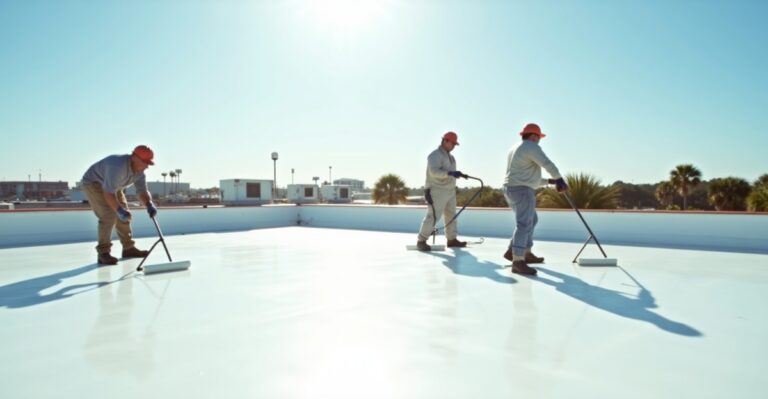
Commercial buildings often show different warning signs. From a safe vantage point, look for ponding water on flat roofs. Standing water that lingers more than 48 hours can compromise membranes. Membrane punctures around HVAC units are another frequent source of commercial roof leak detection calls.
For more visual guidance specific to our state, review how to spot early roof damage signs in Florida homes.
Why Hidden Leaks Are So Common in Florida’s Climate
Florida’s weather creates ideal conditions for concealed roof damage.
Hurricanes and heavy rainfall place intense stress on roofing systems. Afternoon thunderstorms bring sudden bursts of wind-driven rain roof damage. Wind forces water upward beneath shingles instead of allowing it to flow downward as designed.
Underlayment, the water-resistant barrier beneath shingles, can weaken over time. Once compromised, it allows moisture to reach the decking. Decking is the structural wood layer beneath roofing materials. It can absorb small amounts of water gradually, and that moisture may sit unnoticed for weeks.
High humidity makes it worse. In drier regions, minor moisture may evaporate quickly. In Florida, it lingers, increasing the risk of mold growth and wood deterioration.
Coastal communities face added exposure to salt. Salt accelerates corrosion on flashing, fasteners, and metal vents. Over time, tiny gaps form that allow water intrusion.
After a tropical storm in Central Florida, we often find small shingle lifts that do not create immediate leaks. Weeks later, interior staining appears. In older shingle roofs common in Northeast Florida, age combined with wind and heavy rain makes hidden leaks even more likely.
Many of these problems begin small. If left unchecked, they can escalate. We’ve outlined how small leaks can lead to major roof damage, and why early action saves both stress and money.
Understanding Minor Repairs vs. Bigger Structural Concerns
Not every hidden leak requires a full roof replacement. An honest evaluation matters.
Minor maintenance issues often involve a small flashing repair, resealing a vent penetration, or replacing a few storm-damaged shingles. These are commonly handled through targeted roof repair services. When caught early, repairs are typically straightforward and cost-effective.
More serious concerns present differently. Recurring leaks in the same area suggest a deeper issue. Soft or rotting decking points to prolonged moisture exposure. Widespread storm damage roof Florida properties experience after hurricanes may involve multiple roofing layers.
Interior mold growth or persistent moisture odors are major red flags. If structural components are impacted, long-term safety becomes part of the discussion. We’ve explained how a leaky roof can cause structural damage when moisture reaches framing and support elements.
Repair versus replacement decisions depend on several factors:
- Roof age
- Roofing material type
- Extent of water intrusion
- Slope and accessibility
Costs vary because every roof is unique. Our role is to provide clear, realistic guidance. If a repair will solve the issue, we’ll say so. Preventing unnecessary replacements builds trust and protects our neighbors’ budgets.
What to Do If You Suspect a Hidden Roof Leak
Act promptly, but prioritize safety.
Start by documenting the issue. Take clear photos of stains, peeling paint, or damp areas. Record dates, especially if leaks occur during specific storms.
Contain interior water if active dripping occurs. Use buckets, towels, or plastic coverings to protect flooring and furniture. Move valuables away from affected spaces.
If safe access is available, inspect the attic. Look for:
- Damp insulation
- Darkened or stained wood
- Visible daylight through decking
Do not walk on unsupported surfaces. Stay on joists if necessary, and avoid stepping between them.
Avoid climbing onto the roof. Slippery shingles and steep slopes create serious fall hazards.
So when should you call a roofing contractor Florida property owners can trust? If stains continue growing, leaks return after storms, or odors persist, schedule a Florida roof inspection. Regular assessments are essential, and we’ve outlined how often roofs should be inspected in our climate.
A professional roof inspection Central Florida homeowners rely on can identify the true entry point, not just the interior symptom.
When It’s Time to Bring in a Local Roofing Professional
Certain patterns should never be ignored. Repeated ceiling stains after repairs signal that the root problem remains. Leaks that follow every heavy storm point to compromised materials or flashing. Commercial tenants reporting recurring drips require prompt commercial roof leak detection.
Professional hidden roof leak detection Florida property owners depend on involves more than a quick glance. We trace moisture paths to locate the actual entry point. We inspect flashing, underlayment, and decking conditions. On commercial buildings, we evaluate membrane seams and rooftop penetrations.
Working with a licensed and insured contractor matters. Local experience ensures compliance with Florida building codes. Familiarity with hurricane response and storm patterns helps identify subtle damage others might miss. Quality repairs should also include clear warranty coverage.
If widespread storm issues are suspected, coordinated storm damage repair can address both visible and hidden concerns before they expand.
If you’re seeing any of these warning signs in Central or Northeast Florida, schedule a professional roof inspection with Pyramid Roofing FLA through our contact page. We’re proud to serve our community with straightforward advice, careful workmanship, and respect for every home and building we protect.